White Chicken Caprese Lasagna
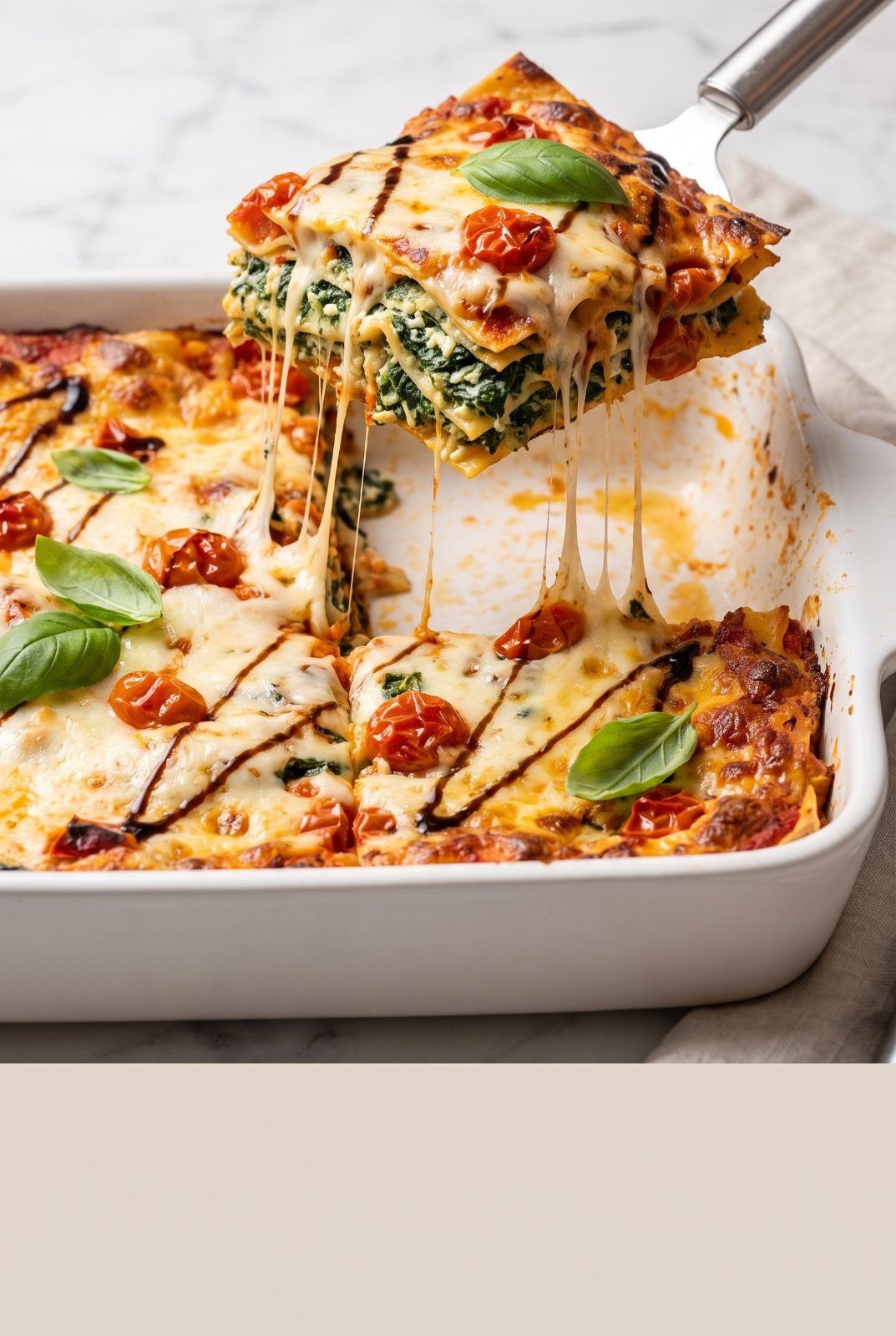
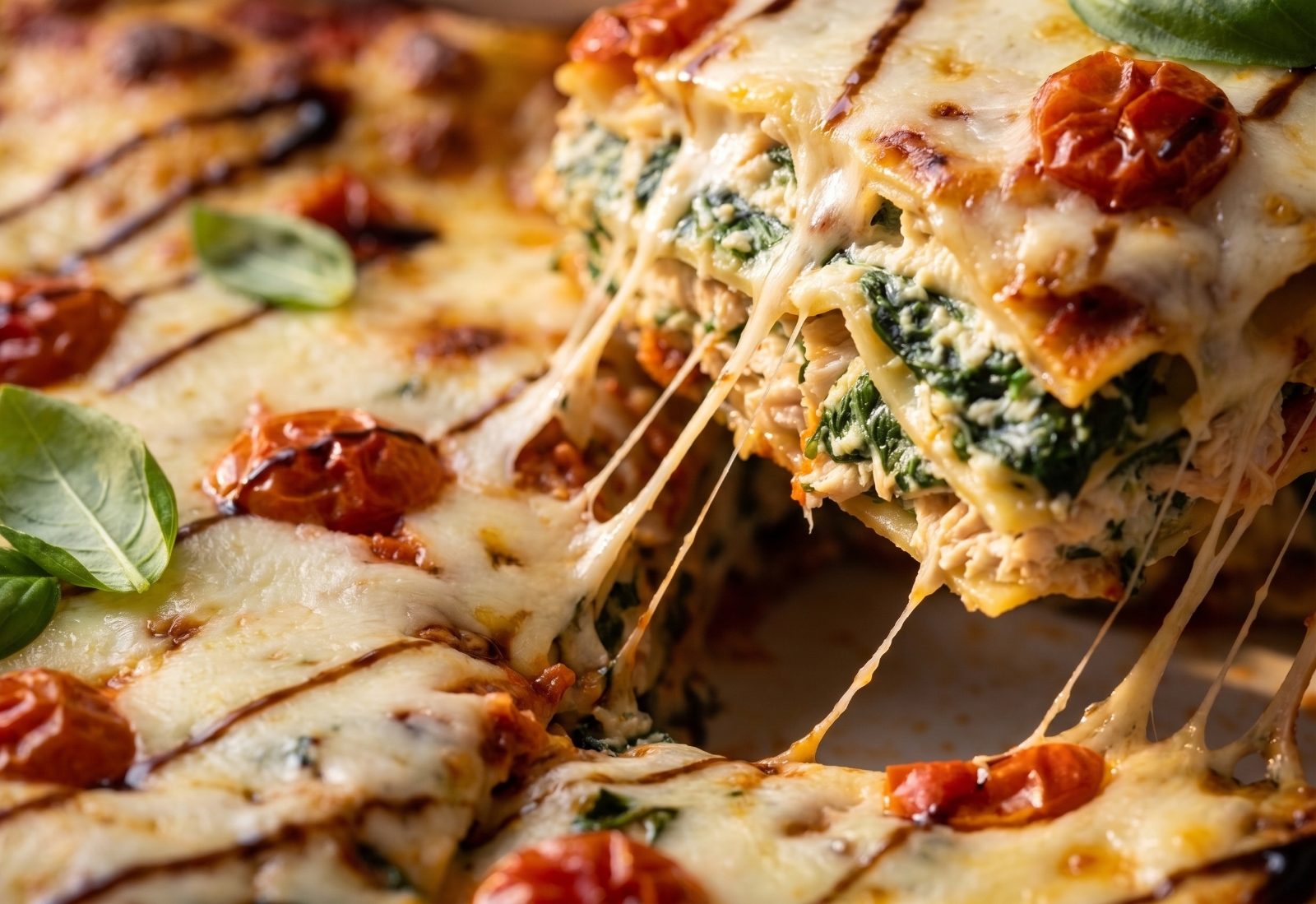
Layers of lasagna sheets, herbed ricotta, shredded chicken and fresh basil under a lid of melted mozzarella, with a balsamic drizzle to finish. Assembles a day ahead and bakes in 45 minutes.
By Hanan · Salt & Hearth
Published August 12, 2026
Full quantities, times and temperatures · How we make this site
Prep
30 min
Cook
45 min
Total
75 min
Serves
8
Be the first to rate this recipe
Tap a star to rate
This is a lasagna built on ricotta and chicken rather than a heavy meat ragu, with basil layered through and a balsamic drizzle at the end that borrows from a caprese salad. It is lighter than the classic without being a diet version, and it has the same useful quality as every good lasagna: you can build the whole thing a day early and bake it when you need it.
Why you'll love this recipe
- Assembles up to 24 hours ahead, so the work and the eating happen on different days.
- Rotisserie chicken makes it genuinely quick — no cooking the protein from scratch.
- Feeds eight from one dish, which makes it a sensible thing to cook for people.
- Freezes well, before or after baking.
- Lighter than a beef lasagna, and the basil and balsamic keep it from feeling heavy.
Ingredients
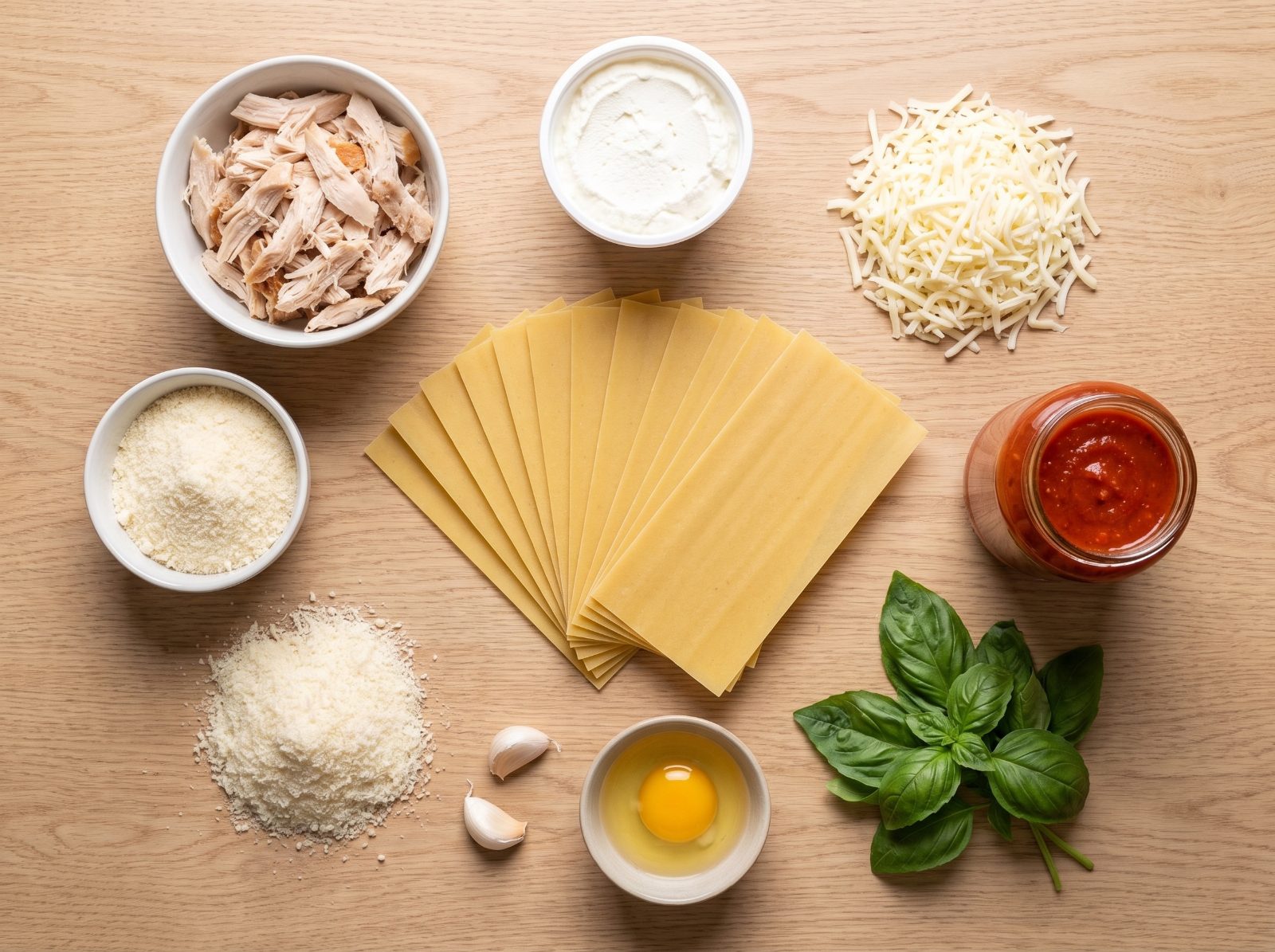
For the layers
- 12 lasagna sheets (about 9 oz)
- 3 cups cooked chicken, shredded — a rotisserie bird is ideal
- 15 oz whole-milk ricotta
- 1 large egg
- 3 cups shredded low-moisture mozzarella, divided
- 1 cup finely grated Parmesan, divided
- 2 cloves garlic, minced
- 1 cup fresh basil leaves, torn, plus more to serve
- 1/2 teaspoon fine salt
- 1/2 teaspoon freshly ground black pepper
For the sauce
- 2 1/2 cups marinara sauce, good quality
To finish
- 2 tablespoons balsamic glaze
- Fresh basil leaves
Ingredient notes & substitutions
- Cooked chicken:
- A rotisserie bird is the shortcut this recipe is designed around — about 3 cups from a medium one. Poached breasts work if you would rather.
- Ricotta:
- Whole-milk, and drain it in a sieve for 20 minutes if it looks wet. Excess water in the ricotta is the main cause of a soggy lasagna.
- Mozzarella:
- Low-moisture, shredded. Fresh mozzarella in brine tastes better on its own but releases far too much liquid here.
- Marinara:
- You are using it as a seasoning rather than drowning the dish, so a good jar earns its place. Choose one without added sugar if you can.
- Fresh basil:
- Torn rather than chopped — a knife bruises the leaves and turns the edges black. Most goes between layers, some on top after baking.
- Balsamic glaze:
- Optional but it is what makes this read as caprese rather than plain white lasagna. The sweet acidity cuts the cheese.
Method
- 1
Heat the oven to 375°F. Boil the lasagna sheets 2 minutes short of the package time — they finish cooking in the oven, and sheets boiled fully turn to paste under 45 minutes of heat. Drain and lay them flat on a clean towel so they do not weld together.
- 2
Stir the ricotta, egg, 1 cup of the mozzarella, 1/2 cup of the Parmesan, the minced garlic, salt and pepper together until evenly combined. The egg is what sets this layer — without it the ricotta slumps and the slices will not hold.
- 3
Spread a thin layer of marinara across the bottom of a 9x13 dish, just enough to stop the first sheets sticking.
- 4
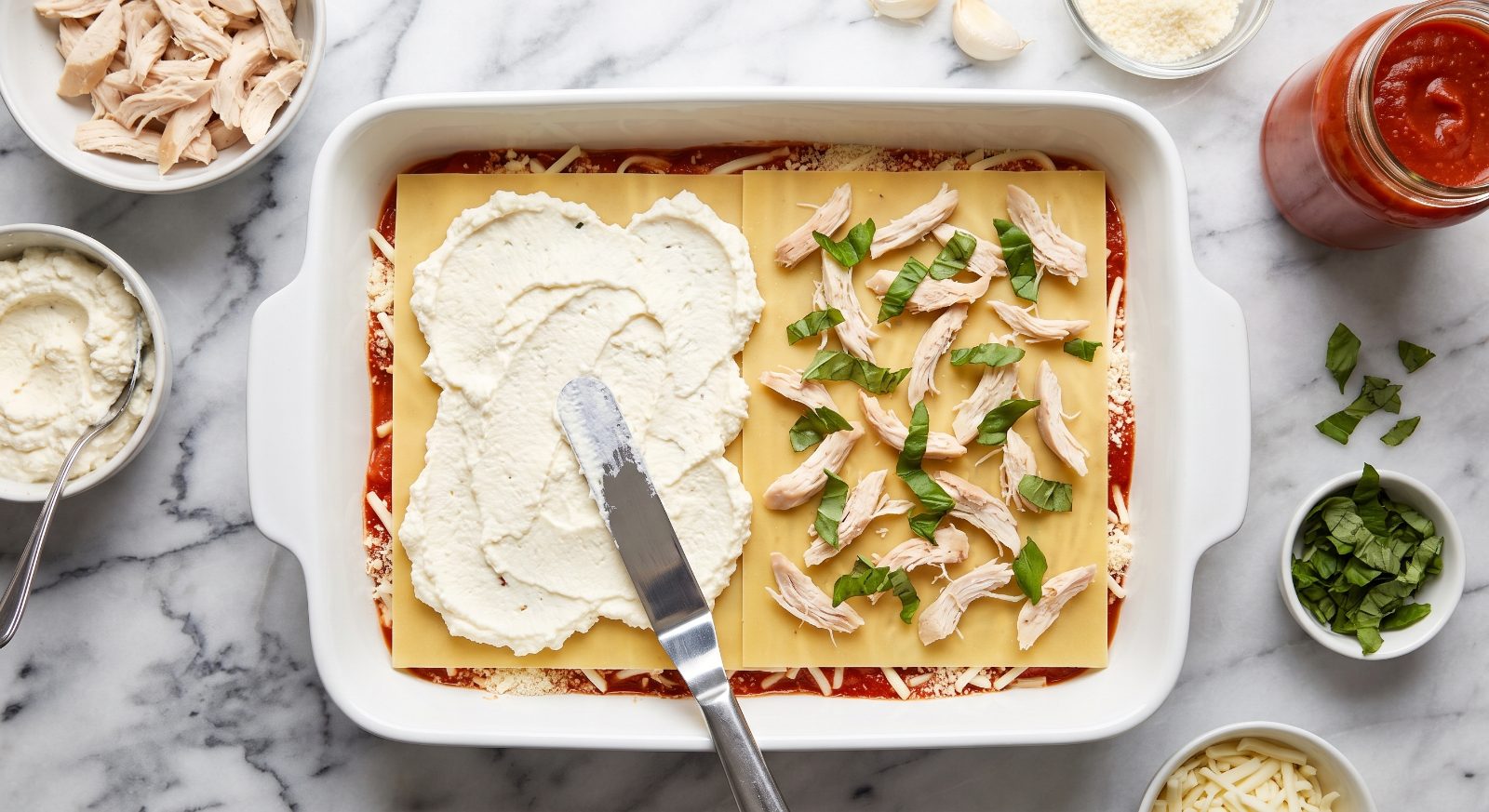
Lay down a third of the sheets, then a third of the ricotta mixture, a third of the chicken, a scattering of torn basil and a few spoons of marinara. Spread the ricotta with the back of a spoon rather than trying to dollop it evenly — it is stiff and will tear the sheets otherwise.
- 5
Repeat twice more, finishing with a layer of sheets, the last of the marinara, then the remaining 2 cups of mozzarella and 1/2 cup of Parmesan.
- 6
Cover with foil, tenting it slightly so it does not sit on the cheese, and bake 30 minutes.
- 7
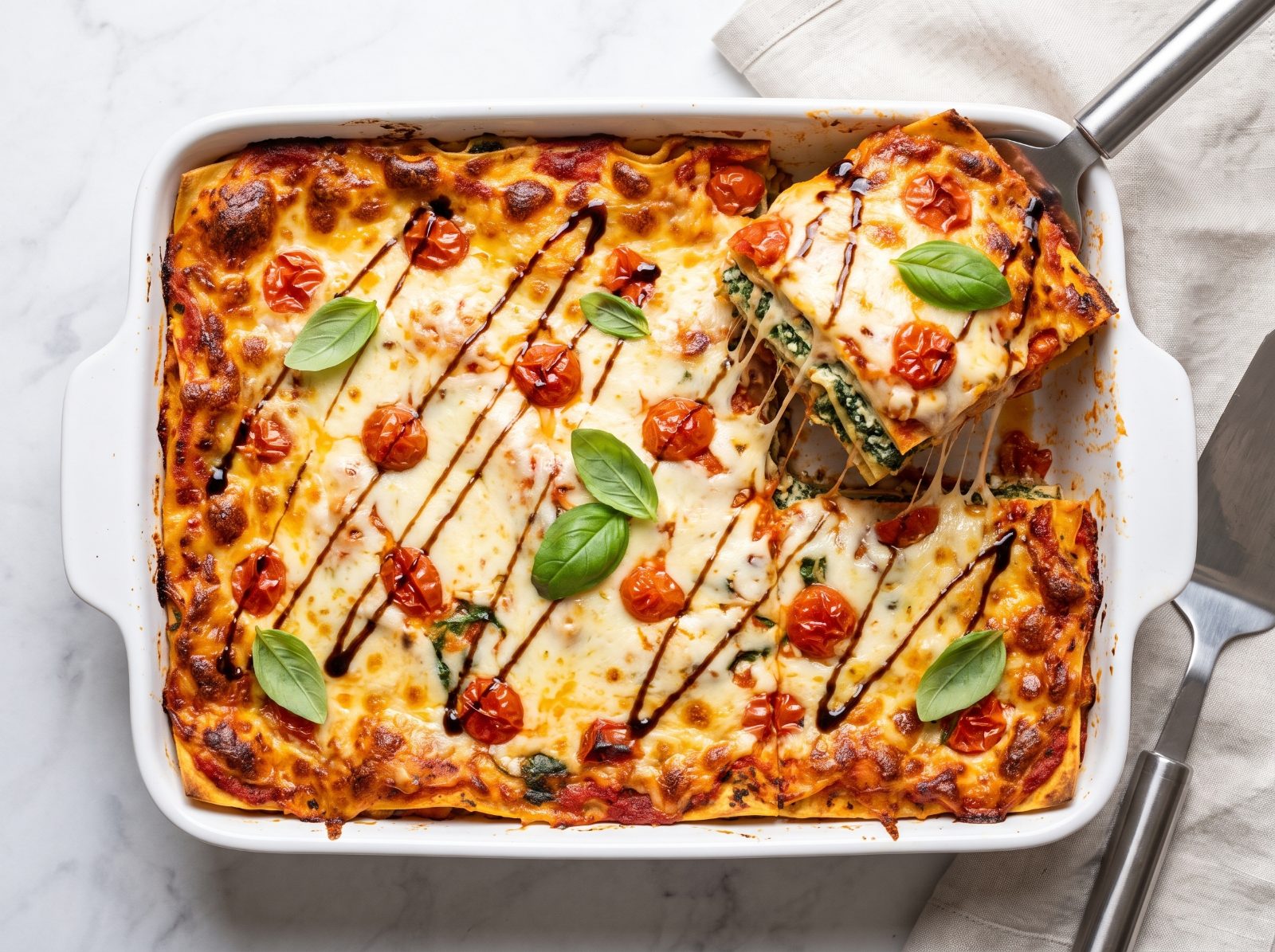
Remove the foil and bake another 15 minutes, until the top is bubbling and patched with gold.
- 8
Rest 10-15 minutes before cutting. This is not optional — cut it straight from the oven and the layers slide apart on the plate. Finish with a drizzle of balsamic glaze and fresh basil.
Tips
- Boil the sheets 2 minutes under. They keep cooking in the oven and there is no recovering from mushy pasta.
- The egg in the ricotta is structural, not optional. It is the difference between neat squares and a puddle.
- Rest it 10-15 minutes before cutting. Every lasagna needs this and almost everyone rushes it.
- Use low-moisture mozzarella for the layers, not fresh mozzarella in water — fresh releases a lot of liquid and leaves you with a wet lasagna.
- Add most of the basil raw between layers rather than cooking it in. Long heat turns basil black and bitter; a final scatter after baking keeps it bright.
Variations to try
- Gluten-free: gluten-free lasagna sheets, checking their package time and still pulling them 2 minutes early.
- Vegetarian: leave the chicken out and layer in roasted zucchini and eggplant, salted and patted dry first.
- Spinach: 10 oz frozen spinach, thawed and squeezed genuinely dry, folded into the ricotta.
- Pesto: a thin layer of basil pesto over each ricotta layer.
- Heat: half a teaspoon of red pepper flakes through the marinara.
Storage & make-ahead
Refrigerate up to 3 days, covered, once fully cooled. Reheat individual portions in the microwave, or the whole dish covered at 350°F for 25-30 minutes. To freeze unbaked, assemble in a freezer-safe dish, wrap in plastic then foil, and freeze up to 3 months — bake from frozen at 375°F, covered, for about 60 minutes, then uncovered for 15-20. To freeze baked, cool completely, portion, and freeze up to 3 months. Assembled and refrigerated unbaked, it keeps 24 hours and needs an extra 10 minutes in the oven from cold.
Frequently asked questions
- Can I assemble it the day before?
- Yes, and it is one of the best things about this recipe. Build it completely, cover and refrigerate up to 24 hours, then add about 10 minutes to the covered bake since it is going in cold.
- Why was my lasagna watery?
- Usually wet ricotta or fresh mozzarella. Drain the ricotta in a sieve if it looks loose, use low-moisture shredded mozzarella, and squeeze any spinach genuinely dry. Resting before slicing also lets it reabsorb.
- Do I have to boil the noodles?
- With standard sheets, yes — but only to 2 minutes under. No-boil sheets work, in which case add about half a cup of extra marinara since they take up liquid as they bake.
- Can I use cottage cheese instead of ricotta?
- Yes, and plenty of people prefer it. Blend it smooth first, or the finished layer will be noticeably lumpy.
- How far ahead can I freeze it?
- Up to 3 months, baked or unbaked. Unbaked gives a slightly better texture. Bake from frozen rather than thawing, and allow roughly an extra 30 minutes.
- What can I use instead of chicken?
- Shredded turkey works directly. For vegetarian, roasted zucchini and eggplant — salt them and pat dry first so they do not water the dish down.
Get the recipes first
New comfort food recipes in your inbox — no spam, unsubscribe any time.