Classic Vanilla Bean Glazed Donuts
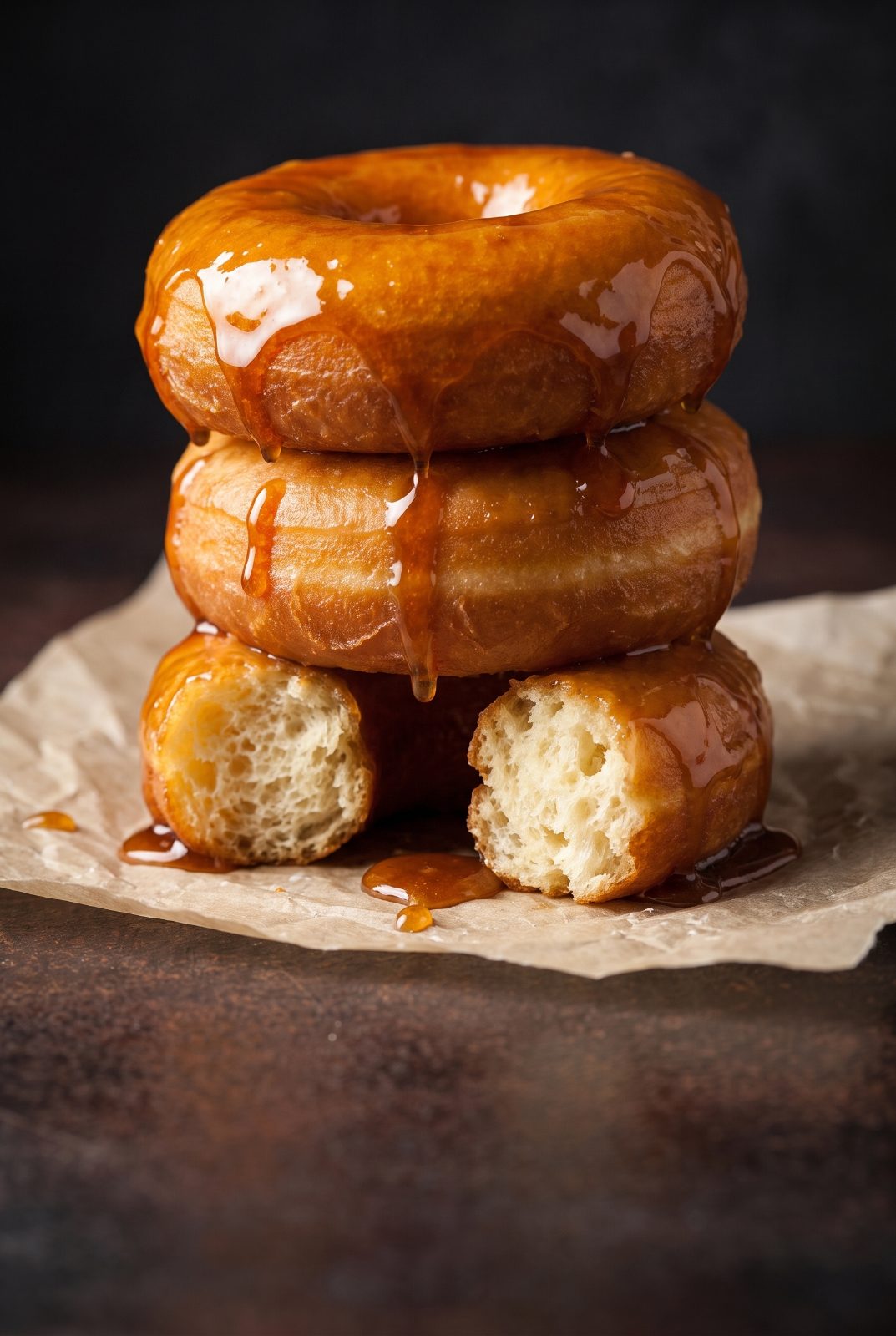
Pillowy yeast-raised donuts fried until golden and dipped warm in a vanilla bean glaze that sets to a thin crackly shell. Twelve donuts plus the holes.
By Hanan · Salt & Hearth
Published August 23, 2026
Full quantities, times and temperatures · How we make this site
Prep
150 min
Cook
20 min
Total
170 min
Serves
12
Be the first to rate this recipe
Tap a star to rate
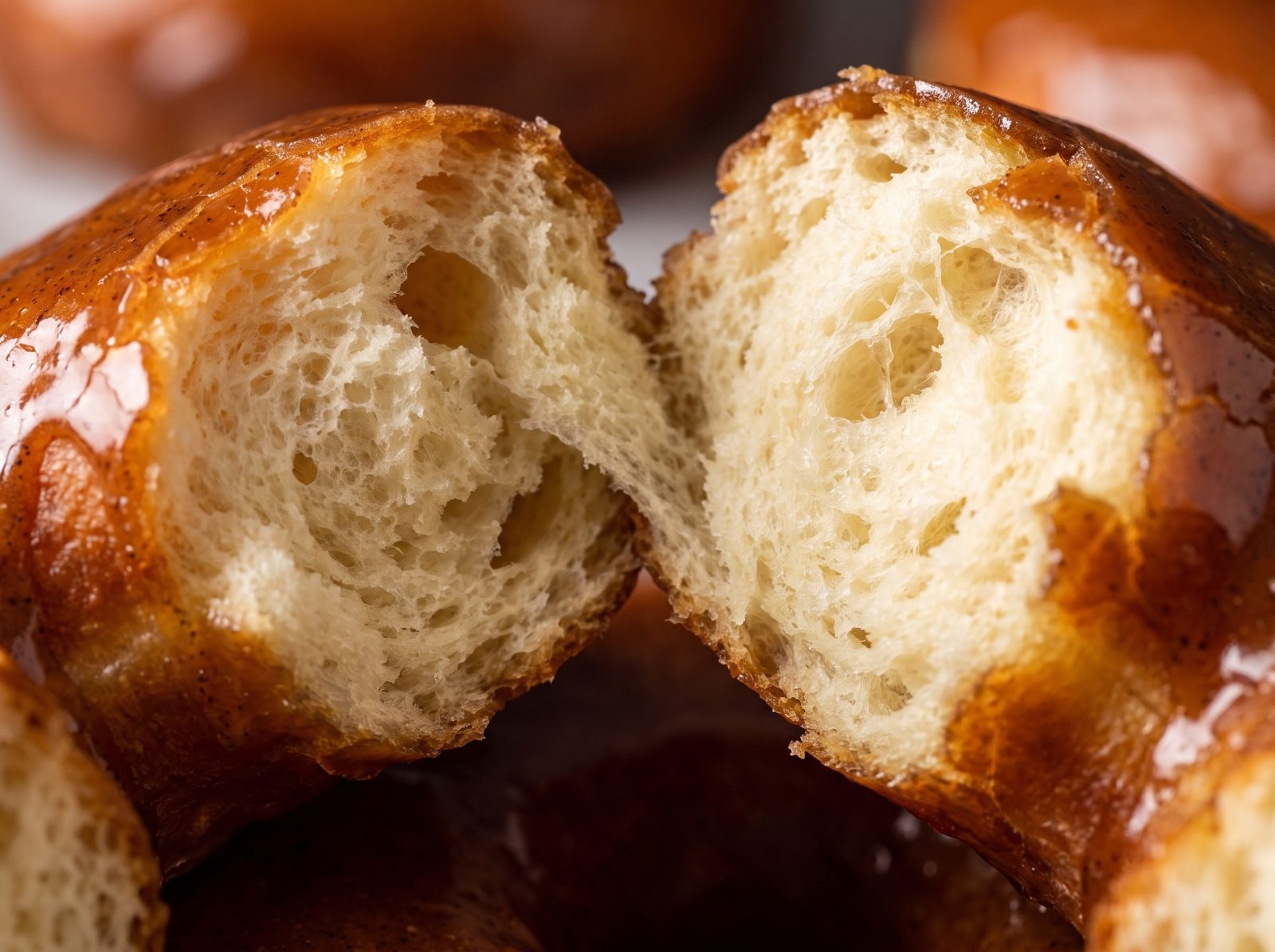
A proper yeast-raised donut - light, airy, faintly tangy from yogurt in the dough - fried in neutral oil and dipped warm in a vanilla bean glaze that dries to a thin crackly shell. Vanilla bean paste rather than extract is what makes this taste like a good bakery rather than a supermarket box: you can see the specks through the glaze and taste them against the plain sweetness. Most of the time is the dough rising; the frying itself is about twenty minutes.
Why you'll love this recipe
- Genuinely light and pillowy, which is what separates yeast donuts from cake ones.
- The glaze sets to a thin crackly shell instead of a thick sugary lid.
- Yogurt in the dough keeps the crumb tender and adds a faint tang.
- Makes twelve donuts plus a dozen holes from one batch.
- The dough can rise overnight in the fridge for a morning fry.
Ingredients
For the dough
- 1 cup (240 ml) whole milk, warmed to 105F
- 1/4 cup (50 g) granulated sugar, plus 1 teaspoon for the yeast
- 2 1/4 teaspoons (7 g) active dry yeast
- 1/3 cup (80 g) Greek yogurt or sour cream, at room temperature
- 6 tablespoons (85 g) salted butter, melted and cooled
- 2 large eggs, at room temperature
- 1 tablespoon vanilla bean paste (or vanilla extract)
- 4 cups (500 g) bread flour, plus more for rolling
- 1 teaspoon fine salt
For frying
- About 8 cups avocado oil or other neutral oil
For the vanilla bean glaze
- 3 cups (360 g) powdered sugar
- 1/4 cup (60 ml) whole milk, plus more as needed
- 2 teaspoons vanilla bean paste
- Pinch of fine salt
Ingredient notes & substitutions
- Bread flour:
- The higher protein builds the structure that lets a donut puff rather than spread. All-purpose works but gives a softer, squatter result.
- Vanilla bean paste:
- Worth buying for this one. The visible specks and the depth are the whole point; extract works but tastes flatter.
- Greek yogurt or sour cream:
- Adds fat and acidity, keeping the crumb tender. Full-fat gives the best texture.
- Avocado oil:
- Neutral and high smoke point. Canola, sunflower or vegetable oil all work equally well; olive oil does not.
- Milk at 105F:
- Warm enough to wake the yeast, cool enough not to kill it. If it feels hot on your wrist, wait.
Method
- 1
Stir the teaspoon of sugar and the yeast into the warmed milk and leave 8-10 minutes until foamy on top. If it stays flat, the yeast is dead or the milk was too hot - start again rather than continuing, because nothing later will rescue it.
- 2
In a stand mixer bowl, whisk the yeast mixture with the remaining sugar, the yogurt, melted butter, eggs and vanilla bean paste until smooth.
- 3
Add the bread flour and salt and mix with the dough hook on medium for 8-10 minutes, until the dough is smooth, elastic and pulls away from the sides. It should still feel slightly tacky - a dough dried out with extra flour fries into a heavy donut.
- 4
Transfer to an oiled bowl, cover, and leave somewhere warm 1 to 1 1/2 hours until doubled.
- 5
Roll the dough out on a lightly floured surface to 1/2 inch thick. Thinner than that and the donuts fry flat instead of puffing into rings.
- 6
Cut rounds with a 3-inch cutter, then cut a 1-inch hole from each centre. Re-roll the scraps once only - dough worked a second time gets tough. Keep the holes; they fry in about 45 seconds and are the cook's reward.
- 7
Set the rings on squares of parchment, cover loosely, and rise 30-45 minutes until visibly puffed and light. Cutting the parchment lets you lower each donut into the oil without deflating it.
- 8
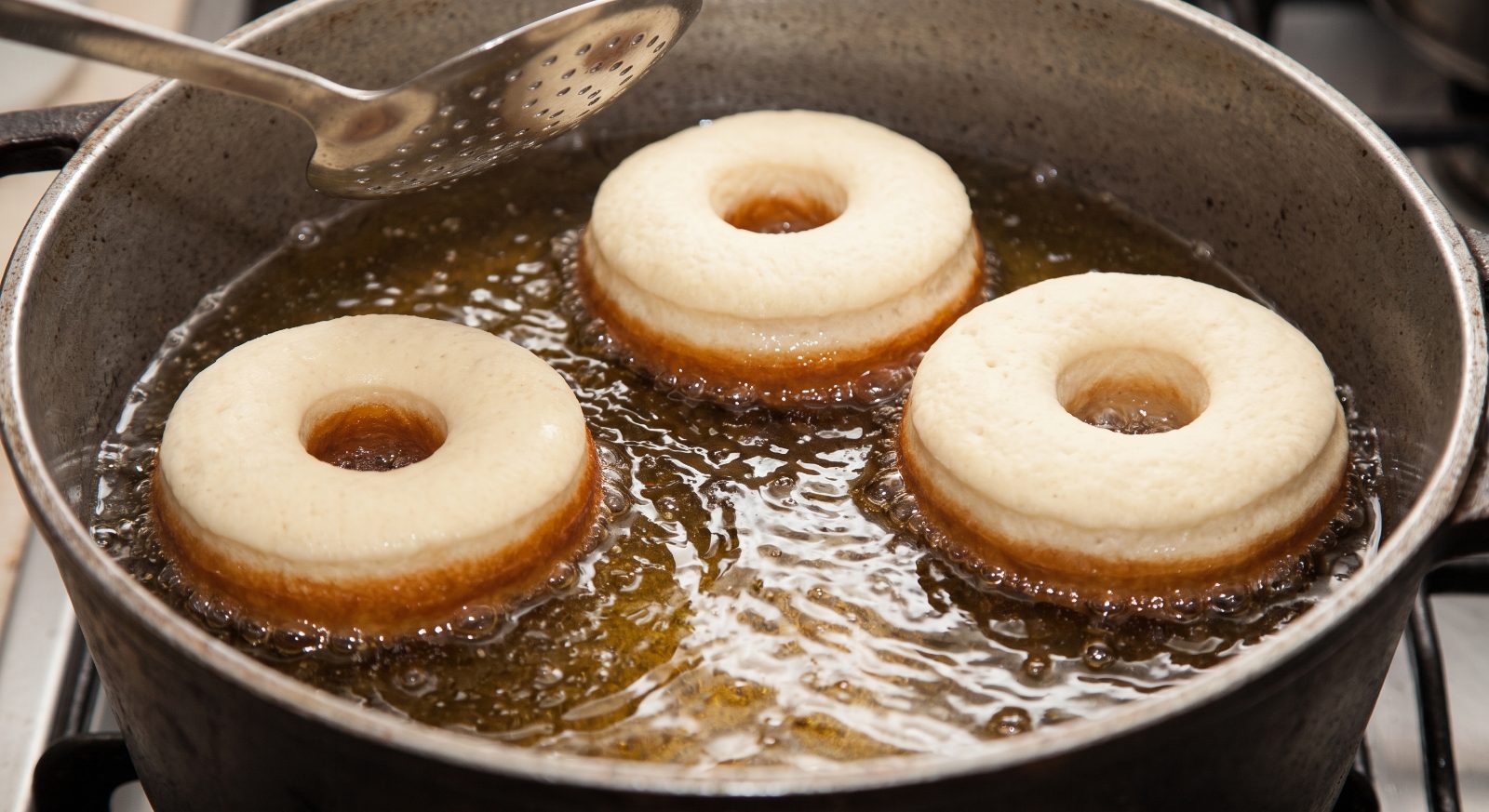
Heat 2 inches of oil in a heavy pot to 350-360F, using a thermometer. Below 340F the donuts drink oil and turn greasy; above 375F the outside colours before the middle cooks.
- 9
Fry 2 or 3 at a time, 60-90 seconds per side, until deep golden. Adding more than three at once drops the oil temperature and every donut in the batch suffers.
- 10
Lift onto a wire rack set over paper towels and let them cool just 2-3 minutes.
- 11
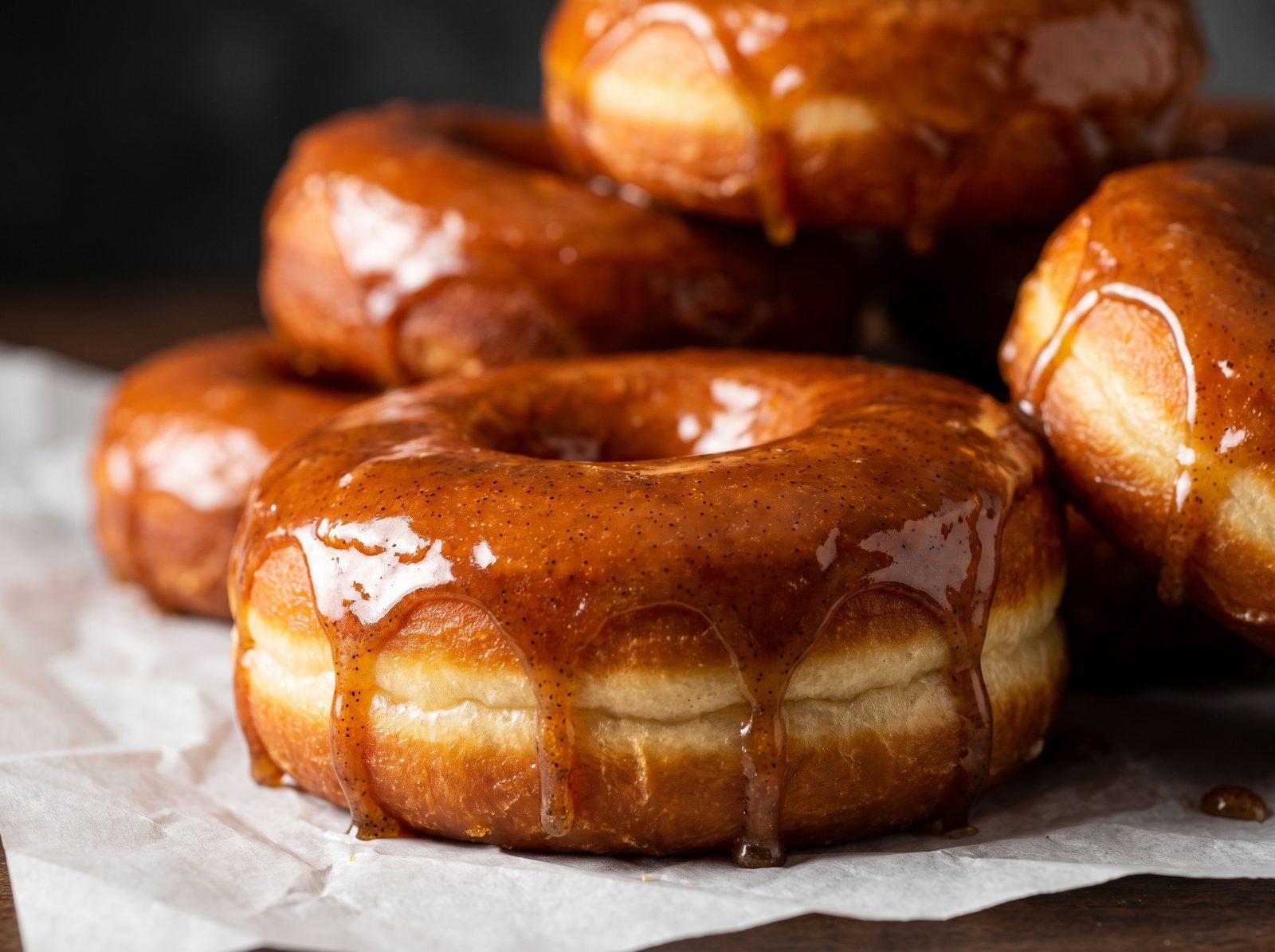
Whisk the glaze ingredients smooth, adding milk a teaspoon at a time until it ribbons off the whisk. Dip each donut face down while still warm, then return to the rack. Warm donuts pull the glaze into a thin even shell; cold ones wear it as a thick opaque cap.
Tips
- Use a thermometer for the oil and check it between batches. Oil temperature is the single biggest variable in frying donuts.
- Cut parchment squares and rise each donut on its own. You lower the paper into the oil and peel it away, and the donut keeps its rise.
- Re-roll scraps only once. Twice-worked dough fries dense.
- Glaze while warm, on a rack, and let the excess drip. That is what gives the thin crackly finish rather than a thick sugary lid.
- These are best within a few hours. Yeast donuts stale faster than any other bake in this collection.
Variations to try
- Add the finely grated zest of a lemon or orange to the dough.
- Swap the vanilla glaze for a chocolate one: whisk 1/4 cup cocoa into the powdered sugar and add milk to loosen.
- Toss the hot donuts in cinnamon sugar instead of glazing.
- Fill them instead of cutting holes: fry as rounds, then pipe in pastry cream or jam.
Storage & make-ahead
Best within a few hours of frying - yeast donuts stale quickly and there is no way around it. Keep leftovers in an airtight container at room temperature for 1 day. Do not refrigerate, which dries them out fast. Unglazed fried donuts freeze for up to 1 month; thaw at room temperature, warm briefly in a 300F oven, then glaze fresh.
Frequently asked questions
- Why are my donuts greasy?
- The oil was too cool. Below about 340F the dough absorbs oil instead of searing. Use a thermometer and let the oil recover between batches.
- Can I bake these instead of frying?
- Not this dough. It is built for the fast puff of hot oil; baked, it comes out closer to a bread roll. Use a dedicated baked donut recipe for that.
- Can I make the dough ahead?
- Yes. After the first rise, cover and refrigerate overnight. Roll and cut from cold, then allow a slightly longer second rise before frying.
- Why did my donuts deflate when I put them in the oil?
- They were handled after proving. Rise each one on its own square of parchment and lower it in on the paper.
Get the recipes first
New comfort food recipes in your inbox — no spam, unsubscribe any time.