Pumpkin Alfredo Pasta with Sage
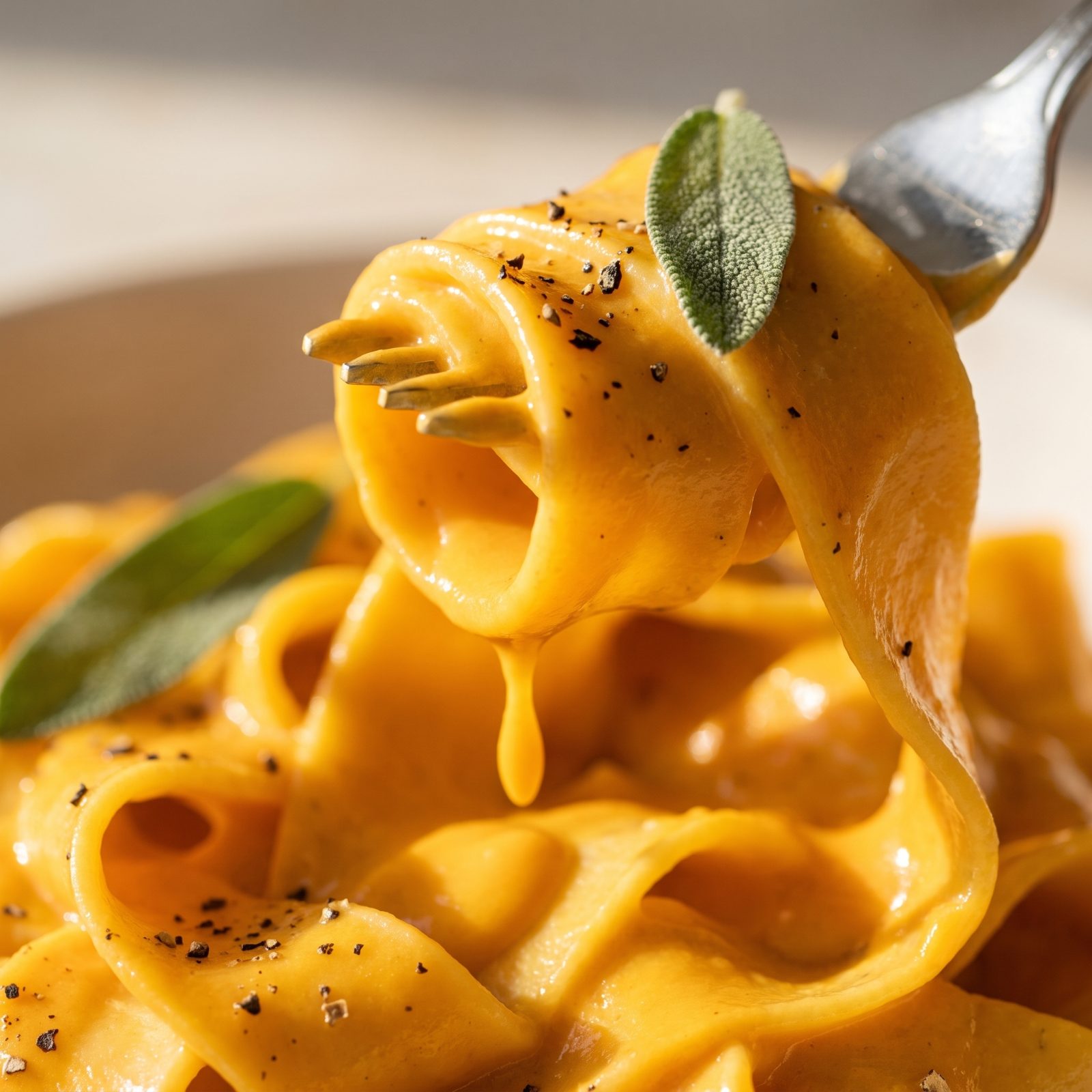
A creamy pumpkin Alfredo with garlic, sage and Parmesan, tossed through wide pappardelle. On the table in the time it takes the pasta to cook.
By Hanan · Salt & Hearth
Published August 20, 2026
Full quantities, times and temperatures · How we make this site
Prep
5 min
Cook
15 min
Total
20 min
Serves
4
Be the first to rate this recipe
Tap a star to rate
Alfredo with canned pumpkin whisked through it — creamy, faintly sweet, savoury from Parmesan and garlic, and perfumed with sage fried in butter. It takes about as long as the pasta does, which makes it a genuine weeknight dinner rather than a project. The pumpkin does more than add colour: it thickens the sauce and cuts the richness, so this feels lighter than a straight Alfredo despite the cream. Wide noodles are the right choice, because a broad flat surface carries this sauce better than anything tubular.
Why you'll love this recipe
- Ready in the time the pasta takes to cook — about 20 minutes total.
- Uses half a can of pumpkin, so it pairs with any pumpkin baking you are already doing.
- Vegetarian, filling, and unfussy enough for a Tuesday.
- The fried sage gives it a restaurant-level aroma for almost no effort.
- Kids eat it without noticing there is a vegetable in the sauce.
Ingredients
For the pasta
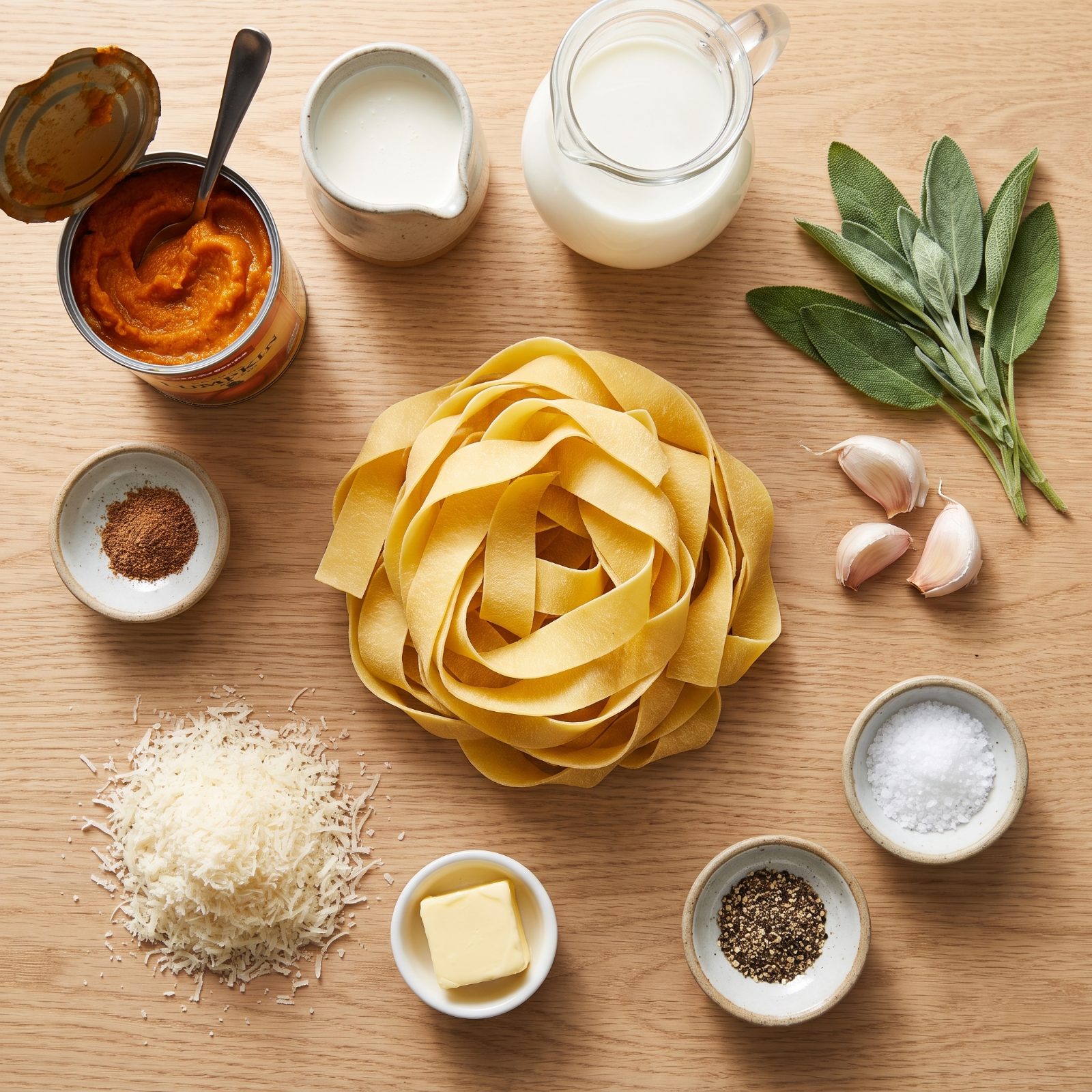
- 8 oz pappardelle or fettuccine
- 1 tablespoon fine salt, for the pasta water
For the pumpkin Alfredo sauce
- 2 tablespoons salted butter
- 1 tablespoon garlic, minced
- 4-5 fresh sage leaves, whole, plus a few extra to finish
- 1 cup heavy cream
- 1 cup whole milk
- 3/4 cup finely grated Parmesan, plus more to serve
- 1 cup (8 oz) canned pumpkin puree
- 1/4 teaspoon ground nutmeg
- 1/2 teaspoon fine salt, plus more to taste
- 1/4 teaspoon freshly cracked black pepper
Ingredient notes & substitutions
- Canned pumpkin:
- Pure pumpkin puree, not pie filling — the sweetened, spiced version would be badly wrong in a savoury sauce. One cup is half a standard can.
- Pappardelle:
- Wide flat noodles hold this sauce best. Fettuccine works; short shapes and tubes do not carry it as well.
- Cream and milk together:
- All cream would be heavy and all milk would be thin. Half and half of each gives a sauce that coats without being cloying.
- Fresh sage:
- Whole leaves fried in the butter and then removed. Sage is strong, and this method flavours the fat without leaving bitter fragments through the sauce.
- Nutmeg:
- A quarter teaspoon, and it should not be identifiable. It is doing background work in a cream sauce, as it does in béchamel.
Method
- 1
Bring a large pot of well-salted water to the boil and cook the pasta to the package timing. Everything else happens while it cooks — the sauce takes about the same time.
- 2
Melt the butter in a wide pan over medium heat, add the minced garlic and the whole sage leaves, and cook 1-2 minutes until the garlic smells sweet and the sage crisps slightly at the edges. Frying the sage in butter rather than dropping it into liquid is what draws its flavour out.
- 3
Pour in the cream and milk, add the nutmeg, salt and pepper, and bring to a gentle simmer. Cook 3-4 minutes, stirring, until it thickens enough to coat the back of a spoon.
- 4
Stir in the Parmesan a handful at a time, letting each addition melt before the next. Adding it all at once makes it clump into strings instead of melting smoothly.
- 5
Fish out and discard the whole sage leaves — they have given up their flavour and turn leathery if left in.
- 6
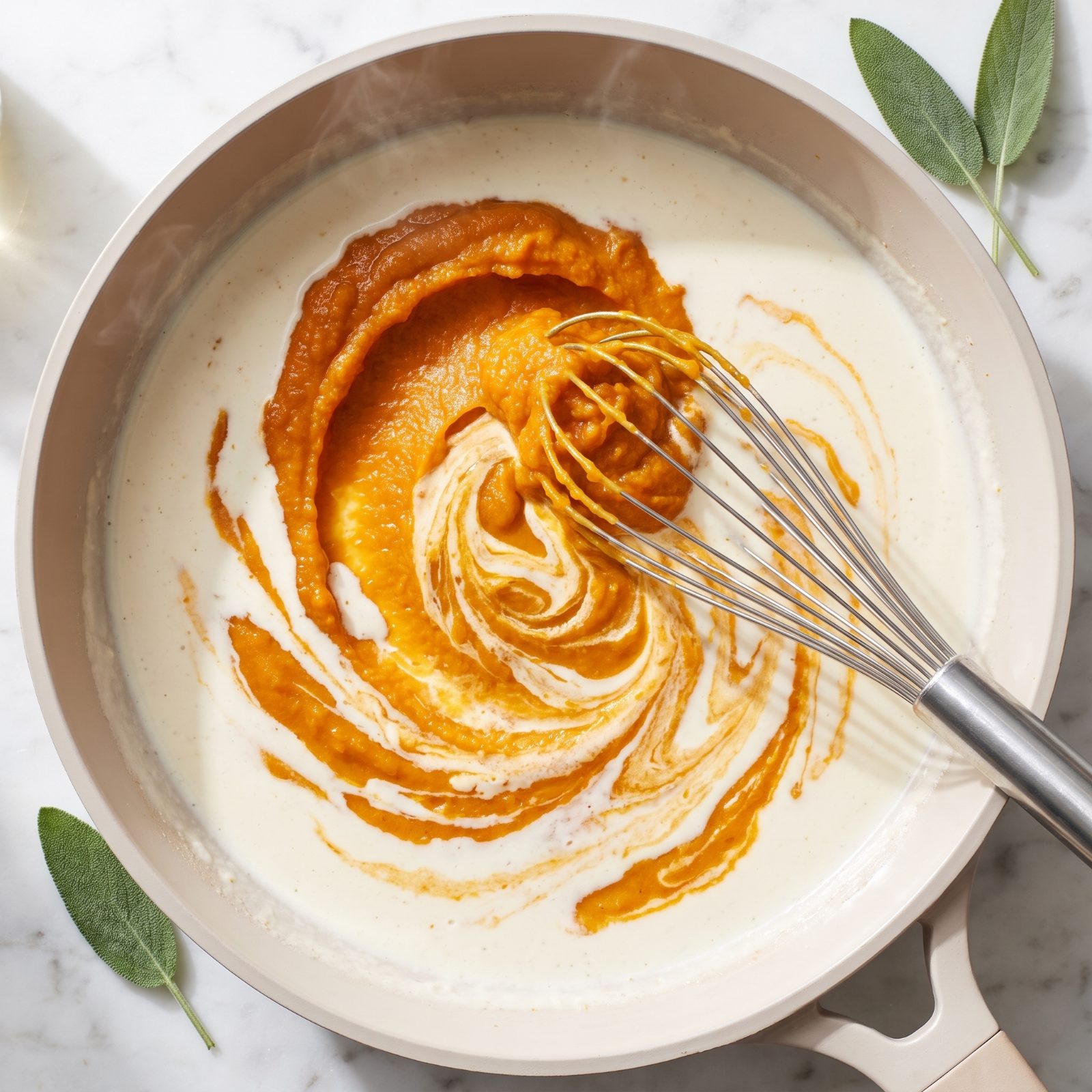
Whisk in the pumpkin puree and cook 2-3 minutes more, just until heated through and evenly orange. Do not let it boil hard after the cream is in, or the sauce can split.
- 7
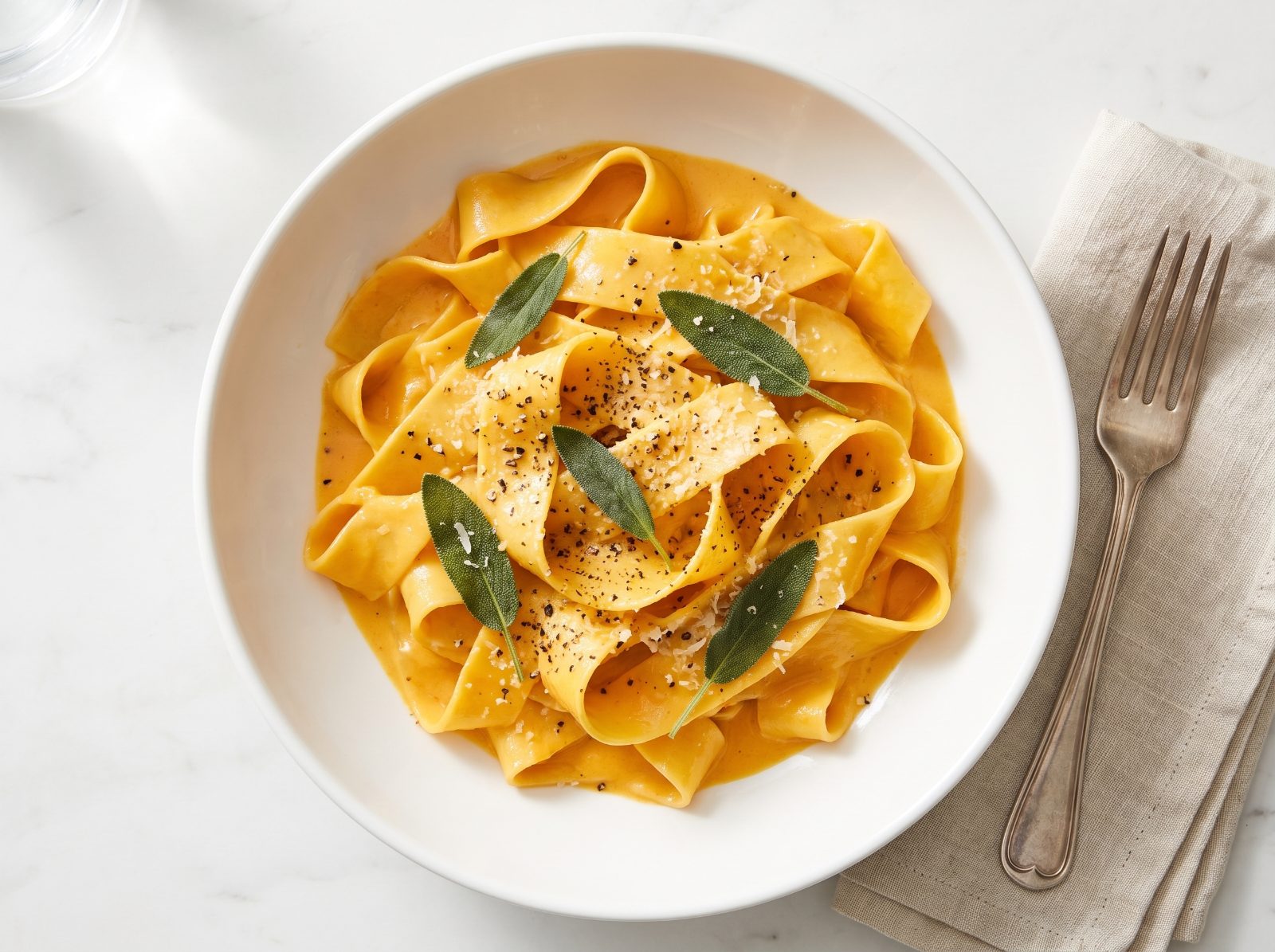
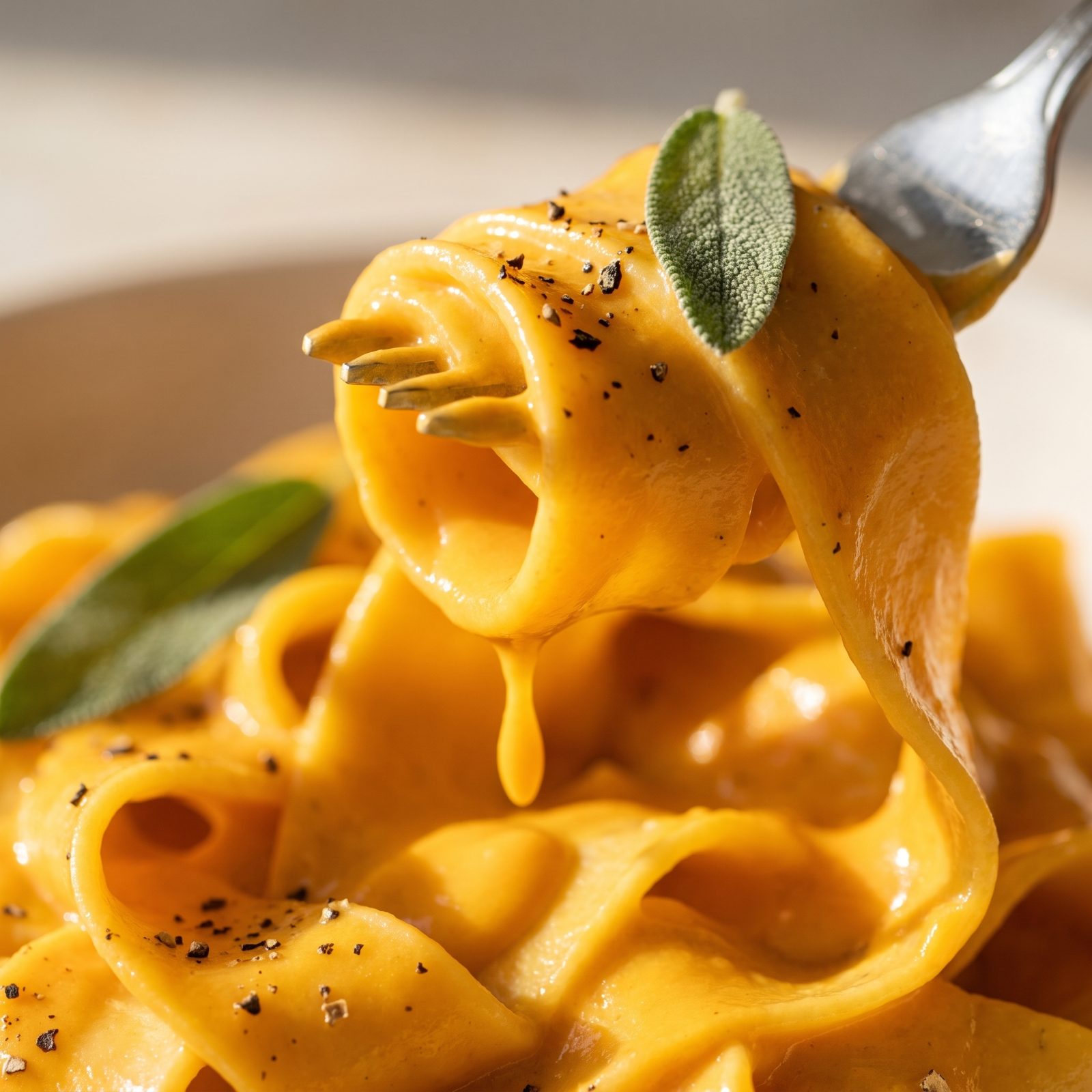
Reserve a cup of pasta water, drain the pasta, and add it straight to the sauce, tossing to coat. Loosen with splashes of the reserved pasta water until the sauce clings to the noodles rather than pooling under them — the starch in that water is what binds sauce to pasta.
- 8
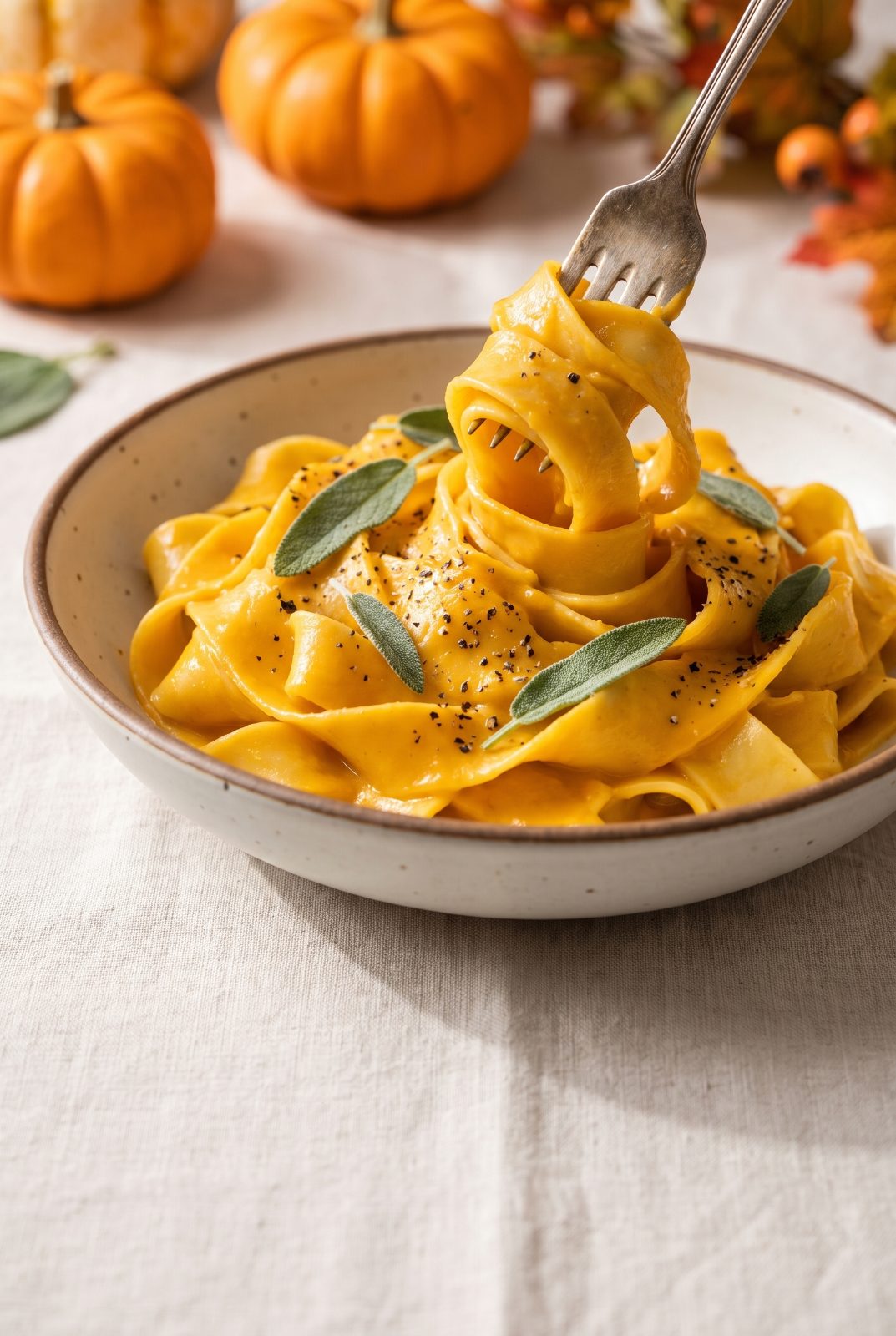
Taste and adjust the salt, then serve with extra Parmesan, cracked black pepper and a few fresh sage leaves.
- 9
bon appetit
Tips
- Save a cup of pasta water before draining. It is the difference between sauce coating the pasta and sauce sitting under it.
- Add the Parmesan gradually off a hard boil, or it clumps rather than melting.
- Use whole sage leaves and remove them, rather than chopping — chopped sage in a cream sauce turns muddy and slightly bitter.
- Do not boil the sauce once the cream is in. A hard boil splits it.
- Grate the Parmesan from a block. Pre-grated cheese contains anti-caking agents that stop it melting cleanly.
Variations to try
- Add cooked chicken, crumbled Italian sausage or pancetta.
- Use pureed butternut squash in place of the pumpkin.
- Swap the cream and milk for full-fat coconut milk to make it dairy-free, and use nutritional yeast for the Parmesan.
- Finish with toasted walnuts or crisped sage leaves for texture.
Storage & make-ahead
Best eaten straight away — cream sauces thicken and dull on standing. Leftovers keep in an airtight container in the refrigerator for up to 3 days; reheat gently in a pan over low heat with a splash of milk or cream to loosen, stirring constantly. Do not microwave on high, which splits the sauce. Not suitable for freezing.
Frequently asked questions
- Why did my sauce split?
- It boiled after the cream went in. Keep it at a gentle simmer once the dairy is in the pan, and reheat leftovers on low heat only.
- Can I use pumpkin pie filling?
- No. It is sweetened and spiced for dessert and would make the sauce inedible. You need plain pumpkin puree.
- The sauce is too thick. What do I do?
- Loosen it with reserved pasta water a splash at a time — better than milk, because the starch helps it cling to the noodles.
- Can I use dried sage?
- Yes, about 1/2 teaspoon of ground sage stirred in with the nutmeg. The flavour is flatter but it works.
Get the recipes first
New comfort food recipes in your inbox — no spam, unsubscribe any time.