Old-School Custard Buns
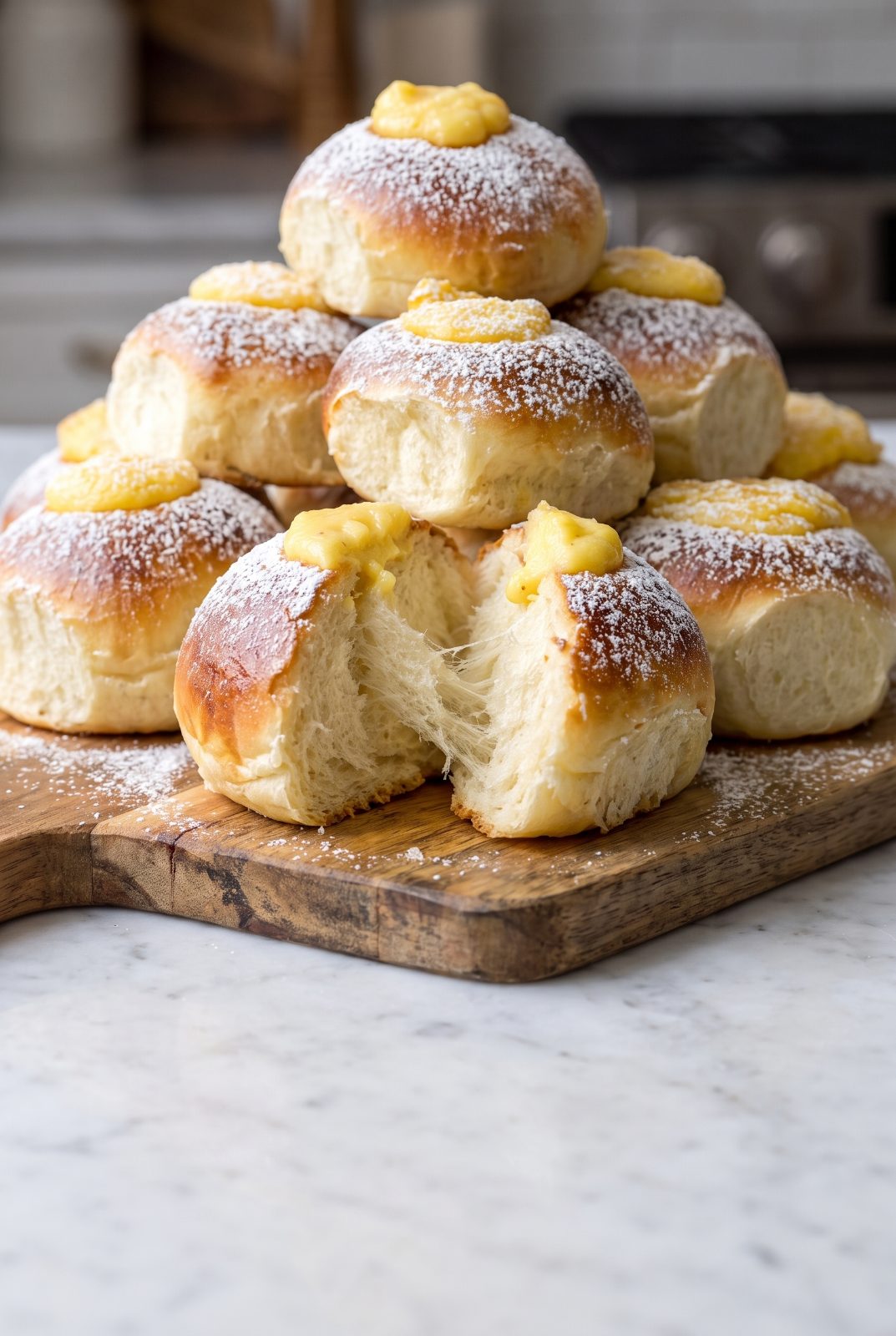
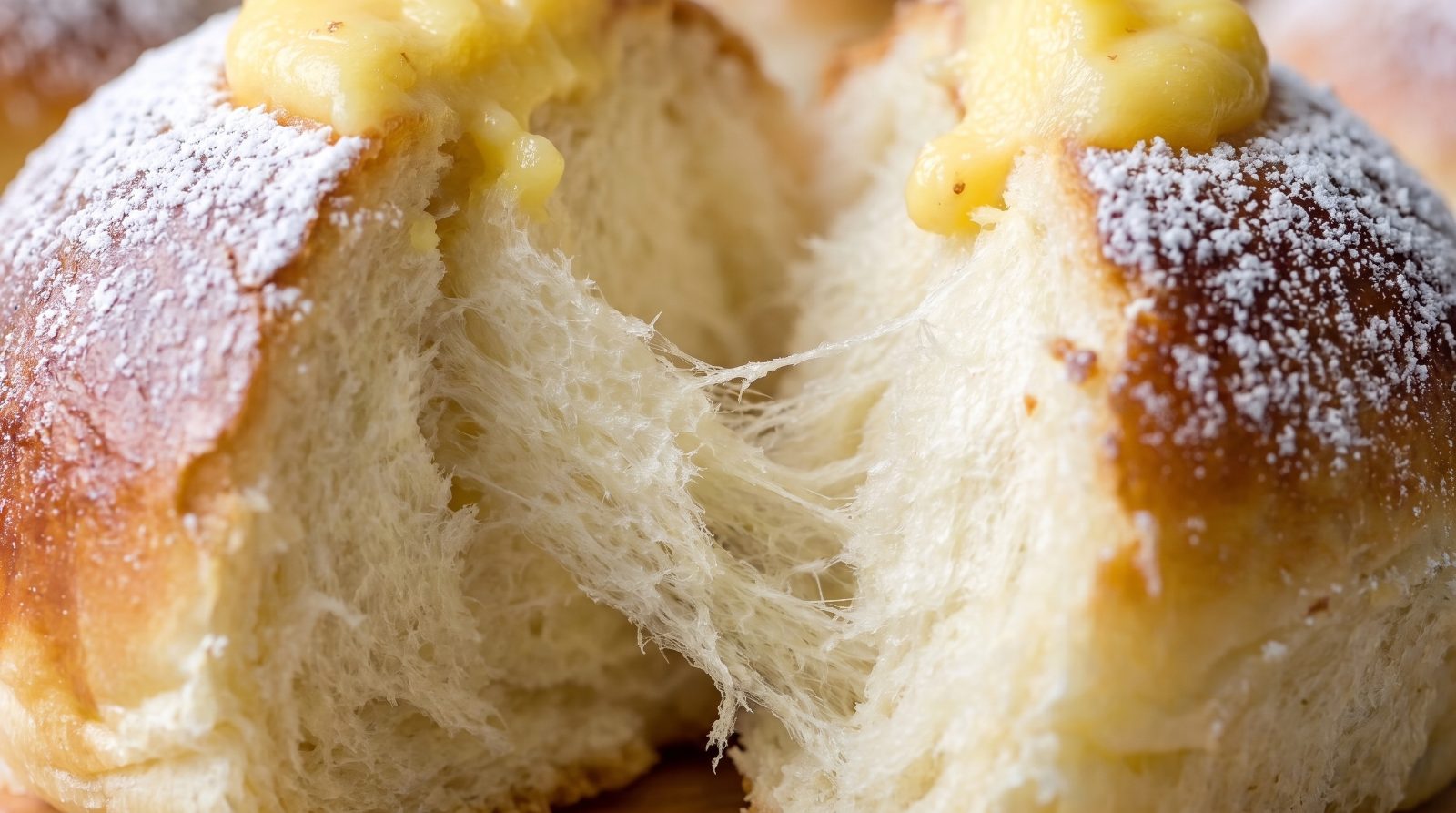
Soft enriched buns with a spoonful of cold vanilla custard baked right into a dimple in the top, then dusted with powdered sugar. The bakery-window classic, made at home.
By Hanan · Salt & Hearth
Published August 13, 2026
Full quantities, times and temperatures · How we make this site
Prep
120 min
Cook
20 min
Total
140 min
Serves
12
Be the first to rate this recipe
Tap a star to rate
These are the buns from the bakery window — soft, faintly sweet, enriched with butter and egg, with a pool of cold vanilla custard sunk into the top and a heavy dusting of powdered sugar over everything. They are the sort of thing that disappears from the counter by mid-morning. The dough is a straightforward enriched bread dough, and the custard skips the whole business of tempering eggs on the stovetop in favor of something that works better here anyway: instant pudding mix whipped into cold cream. It sets firm, holds its shape through the oven, and tastes clean and vanilla-forward. This is a two-rise recipe, so most of the time is waiting rather than working.
Why you'll love this recipe
- The dough is enriched with butter, egg and milk, which gives you a genuinely soft, tearable crumb rather than a dense roll.
- The custard takes three minutes and never splits, curdles or needs a thermometer.
- You can make the dough the night before and bake in the morning — the cold rise makes the flavor better, not worse.
- Twelve buns from one batch, which covers a brunch table or a week of breakfasts.
- They look like they came from a real bakery, and the technique that gets you there is just a deep enough dimple.
Ingredients
For the buns
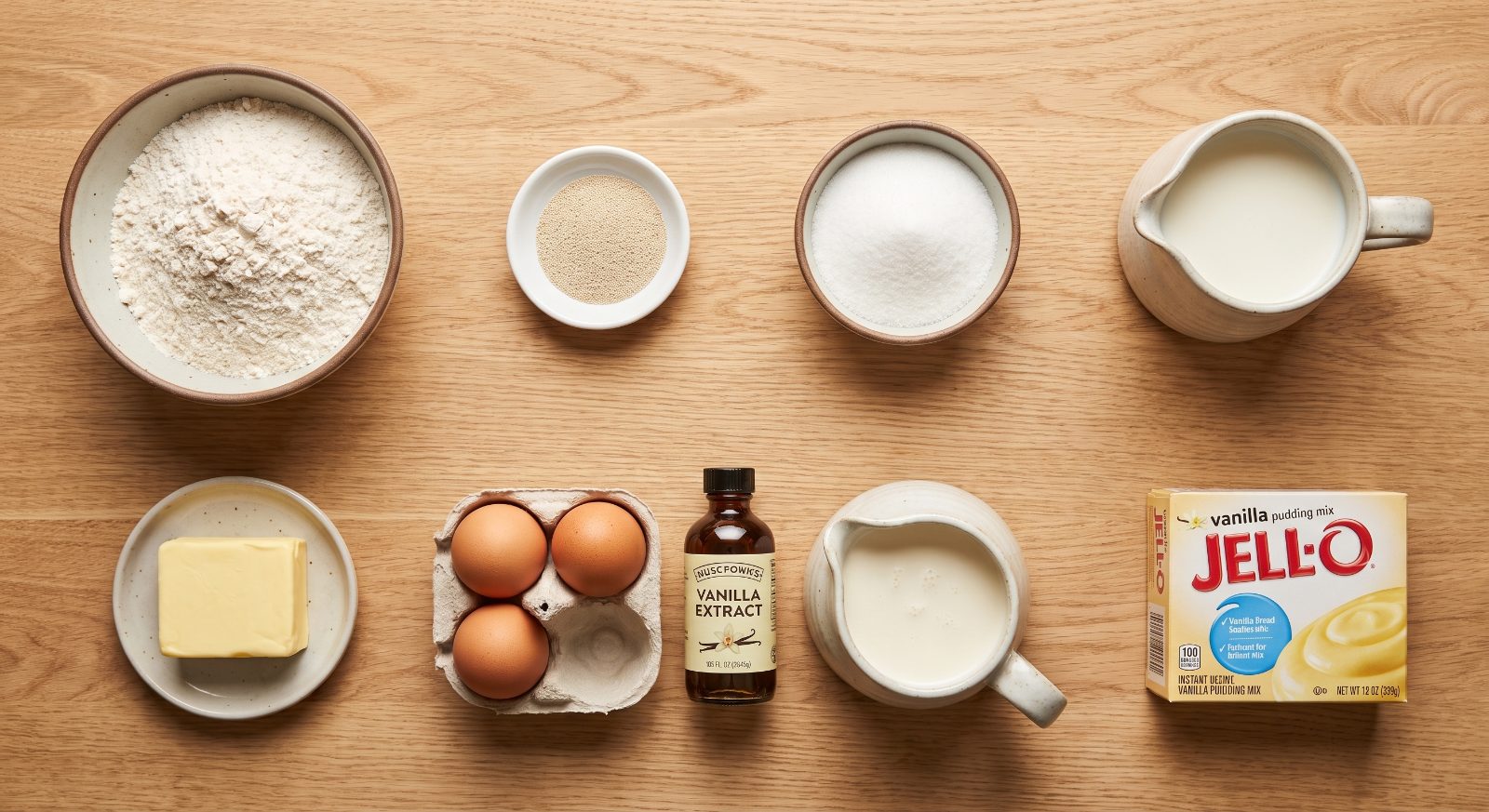
- 5 1/3 cups (640 g) bread flour
- 1/2 cup (110 g) superfine sugar
- 1 teaspoon fine salt
- 2 1/2 teaspoons (10 g) instant yeast
- 1 1/4 cups (300 ml) whole milk
- 7 tablespoons (100 g) unsalted butter, melted
- 2 teaspoons vanilla extract
- 2 large eggs, lightly beaten
For the custard
- 1 1/4 cups (300 ml) heavy cream, cold
- 1 3/4 oz (50 g) instant vanilla pudding mix (about half a 3.4 oz box)
To finish
- 1 large egg, lightly beaten, for brushing
- Powdered sugar, for dusting
Ingredient notes & substitutions
- Bread flour:
- The higher protein builds the gluten structure that lets an enriched dough rise tall instead of spreading. All-purpose will work but the buns will be softer and squatter.
- Instant yeast:
- Goes straight in with the dry ingredients, no proofing needed. If you only have active dry, bloom it in the warm milk for 10 minutes first and check it foams.
- Superfine sugar:
- Dissolves faster into the dough than granulated. Regular granulated sugar works fine — just mix a little longer.
- Instant vanilla pudding mix:
- Not a substitute for real pastry cream so much as a different tool. It thickens cold, sets firm, and holds a dome in a hot oven, which a stovetop custard will not do without cornstarch and chilling time.
- Heavy cream:
- Must be cold. It has to whip to a thick, scoopable consistency, and warm cream simply will not get there.
Method
- 1
In the bowl of a stand mixer fitted with the dough hook, combine the flour, sugar, salt and yeast. Keep the salt and the yeast on opposite sides of the bowl until you mix — direct contact with salt weakens yeast before it ever gets going.
- 2
Warm the milk to lukewarm, around 105°F. It should feel like nothing on the inside of your wrist. Stir in the melted butter and vanilla. Anything hotter than 115°F will start killing the yeast.
- 3
Pour the milk mixture and the beaten eggs into the dry ingredients and mix on medium for 5-6 minutes, scraping the sides down once or twice, until the dough is smooth, glossy and elastic. It should pull cleanly from the bowl but still feel tacky.
- 4
No mixer? Stir the wet into the dry with a wooden spoon until you have a shaggy, sticky mass, then turn it onto a floured surface and knead by hand for a full 10 minutes. Resist adding much extra flour — a slightly sticky dough is what gives these buns their softness.
- 5
Transfer to an oiled bowl, cover with plastic wrap and a tea towel, and leave somewhere warm for about 1 hour until more than doubled. You can also refrigerate the covered dough overnight at this point and pick up the next day — the slow cold rise actually improves the flavor.
- 6
Make the custard while the dough rises. Put the cold cream in a mixing bowl, sprinkle the pudding mix over the surface, and whisk 2-3 minutes until thick and holding its shape. This sets firm and cold rather than loose, which is exactly why it stays put in the oven instead of running off the bun.
- 7
Refrigerate the custard until you need it. A cold, firm custard is much easier to scoop neatly and holds its dome through baking.
- 8
Heat the oven to 350°F and line a large flat baking sheet with parchment.
- 9
Turn the dough out onto a floured surface and knead it lightly to knock out the big bubbles. Divide into 12 equal pieces, about 110 g each, and roll each into a smooth tight ball. Space them well apart on the sheet — they will nearly double again.
- 10
Cover with a tea towel and let rise in a warm place for 30 minutes, until visibly puffed and springy when pressed lightly.
- 11
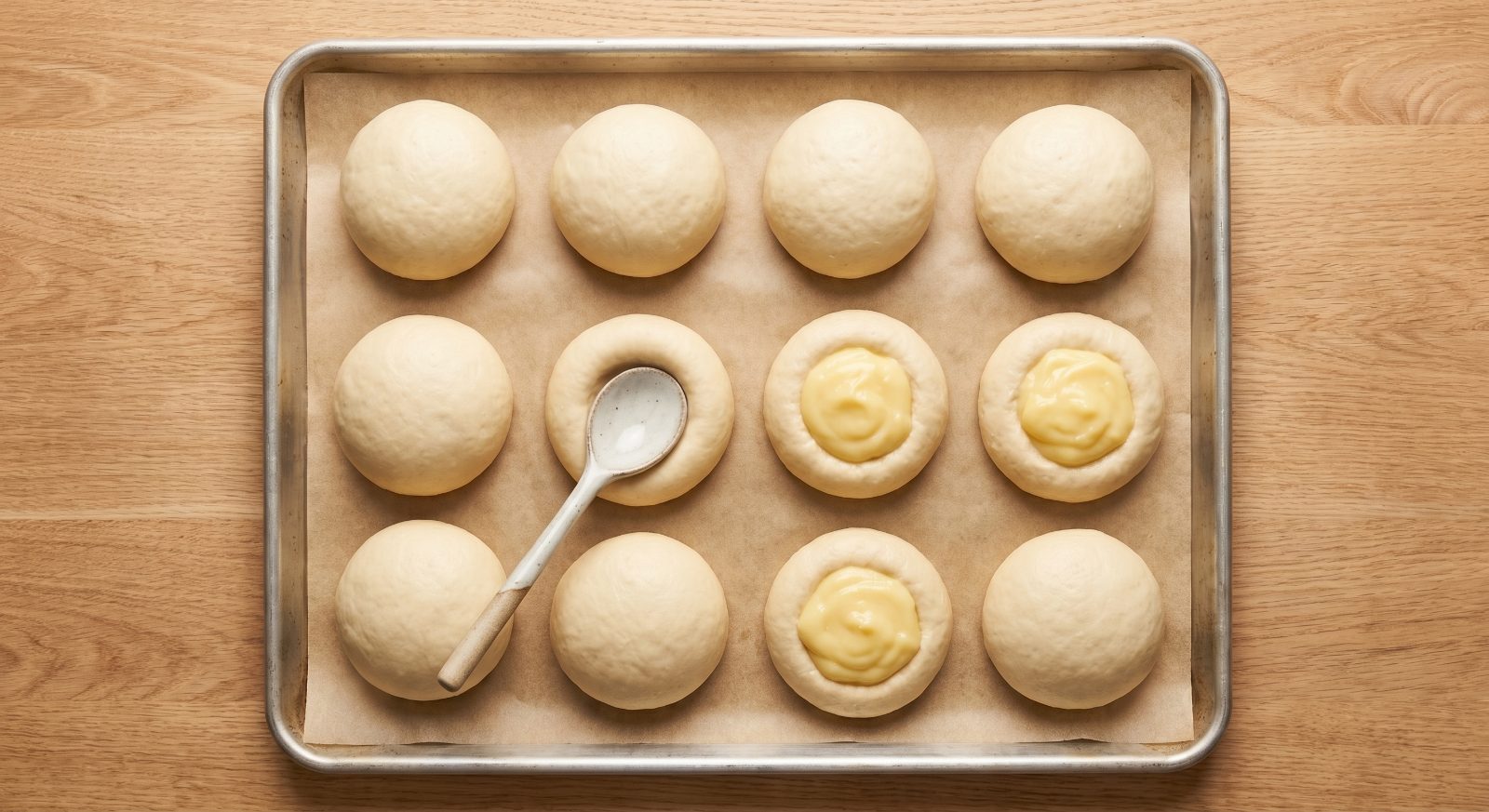
Press a deep indentation into the top of each bun with the back of a small spoon or a small ice cream scoop. Go deeper than feels right — the dough springs back as it bakes, and a shallow dimple will close up and push the custard off.
- 12
Spoon a generous dollop of chilled custard into each well, then brush the exposed dough with beaten egg, keeping the egg off the custard so it does not streak.
- 13
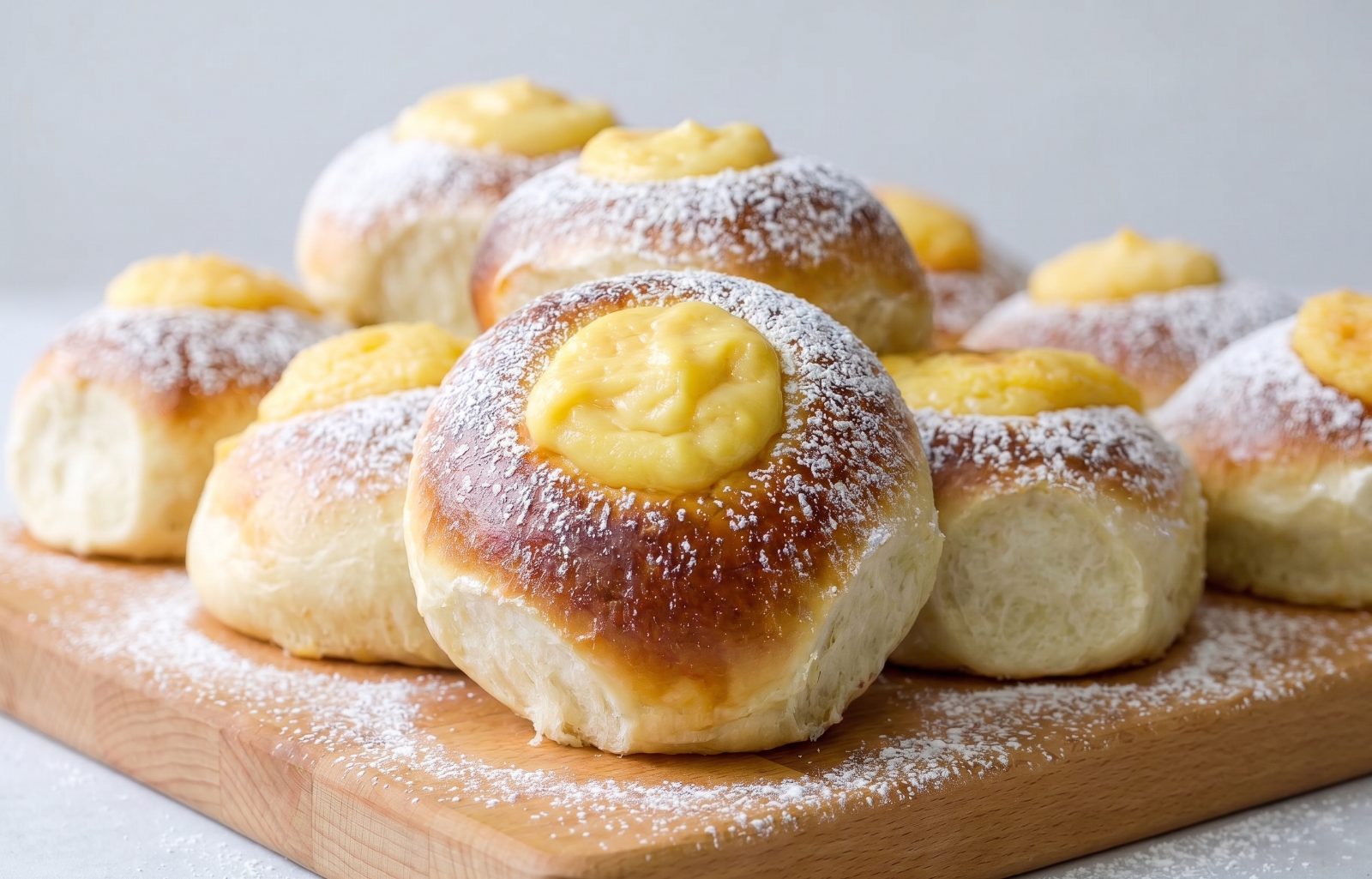
Bake 20 minutes, until deep golden and cooked through. Cool on the tray for 10 minutes, then dust generously with powdered sugar and serve warm.

- 14
best brunch ..
- 15
bon appetit
Tips
- Weigh the dough portions. Buns of even size rise and bake evenly, and 110 g each is the difference between a matched tray and a few pale, underbaked ones.
- Make the indentation deeper than you think it needs to be. This is the single most common failure — the dimple closes in the oven and the custard slides off the side.
- Use cold cream straight from the fridge for the custard. Warm cream will not whip thick enough to hold its dome.
- If the tops are browning before 20 minutes, tent loosely with foil rather than dropping the oven temperature.
- Dust with powdered sugar only once the buns have cooled a little. On a piping hot bun it melts straight into a damp film.
Variations to try
- Swap the vanilla pudding for chocolate, butterscotch or lemon and dust with cocoa instead of powdered sugar.
- Press a spoonful of raspberry or apricot jam into the dimple before the custard for a jam-and-cream version.
- Scatter sliced almonds over the egg-washed dough before baking for crunch and a bakery-counter look.
- Add the finely grated zest of one lemon or orange to the dough for a brighter, less plain crumb.
- Brush the warm baked buns with a thin sugar syrup instead of dusting, for a glossy finish that keeps them soft longer.
Storage & make-ahead
Best on the day they are baked, while the crumb is still soft and the custard cold. Store leftovers in an airtight container in the refrigerator for up to 3 days — the custard means they cannot sit at room temperature. Bring back to room temperature before eating, or warm the bun briefly and add the powdered sugar fresh. Unfilled baked buns freeze well for up to 2 months; thaw, dimple, fill and warm through. The custard itself does not freeze.
Frequently asked questions
- Why did my custard slide off the top?
- Almost always a shallow dimple. The dough has one last burst of rise in the oven, and if the well is not deep enough it closes up and pushes the custard over the edge. Press firmly, almost to the base of the bun.
- Can I make the dough the night before?
- Yes, and it is the better way to do it. After the first rise, cover the bowl tightly and refrigerate overnight. Shape straight from cold in the morning, then allow a little extra time for the 30-minute rise since the dough starts colder.
- My dough did not rise. What happened?
- Either the yeast was dead or the milk was too hot. Lukewarm means about 105°F — comfortably warm, not hot. If you are unsure about your yeast, stir it into the warm milk with a pinch of sugar and wait 10 minutes; it should foam noticeably.
- Can I use real pastry cream instead?
- You can, but chill it thoroughly and thicken it well with cornstarch first. A loose stovetop custard will spread and run in the oven heat, which is exactly the problem the pudding-mix version avoids.
- How do I know the buns are done?
- Deep golden on top and sides, and firm when tapped. If you want certainty, the center of a bun should read about 190°F.
Get the recipes first
New comfort food recipes in your inbox — no spam, unsubscribe any time.