Mango Chicken Curry
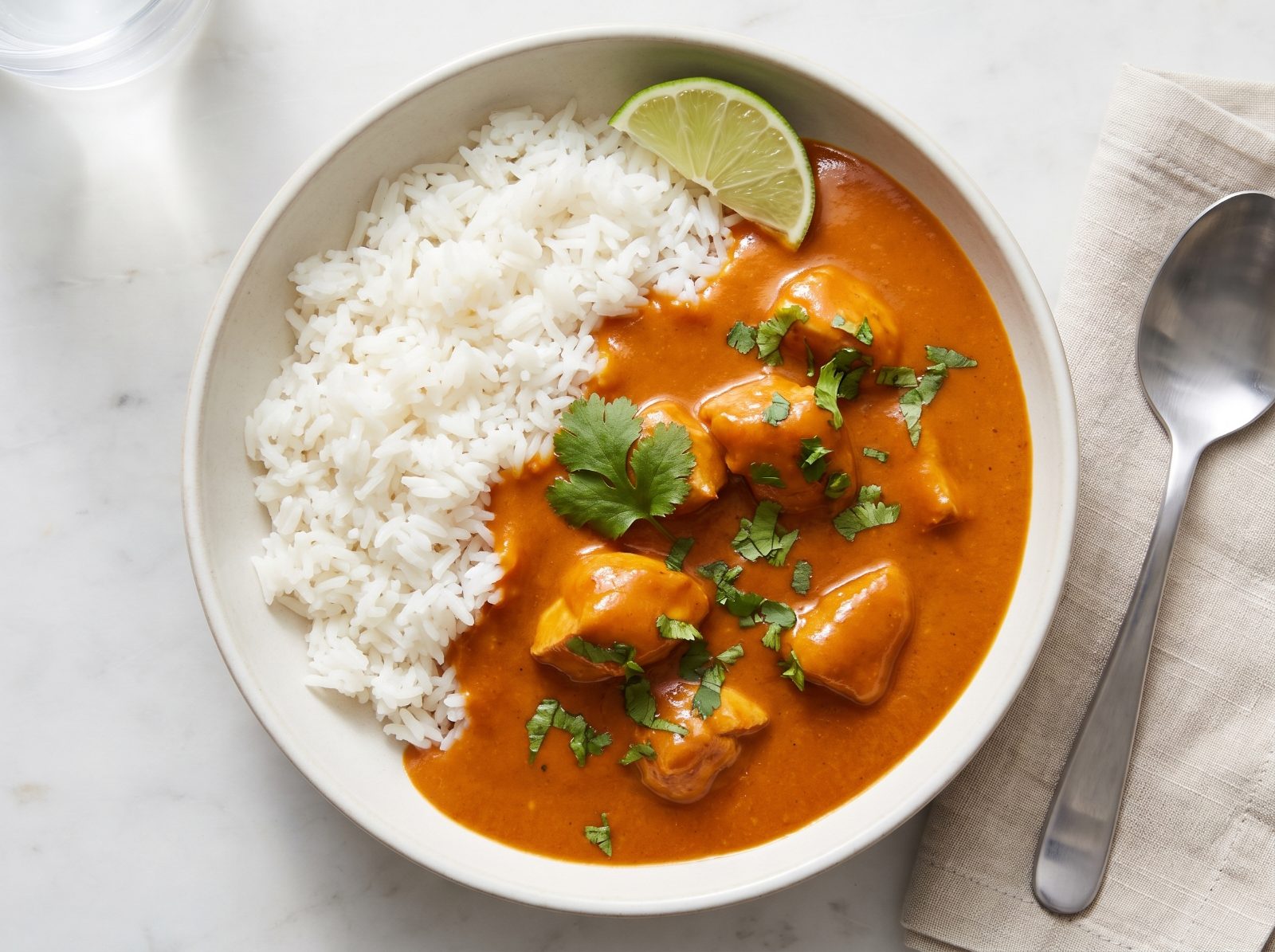
A coconut curry with mango blended into the sauce itself and more folded through at the end, so it is sweet, fragrant and just warm with red curry paste. Ready in about an hour.
By Hanan · Salt & Hearth
Published August 12, 2026
Full quantities, times and temperatures · How we make this site
Prep
30 min
Cook
30 min
Total
60 min
Serves
4
Be the first to rate this recipe
Tap a star to rate
Most mango curries stir chopped fruit into a finished sauce. This one blends mango into the sauce itself, then adds a second cup at the end, so the sweetness runs all the way through instead of arriving in occasional bites. Red curry paste and ginger keep it from tipping into dessert territory, and a squeeze of lime at the end pulls it all back into focus.
Why you'll love this recipe
- An hour start to finish, most of it a simmer.
- The blended sauce is silky in a way chopped-fruit versions never are.
- Mild enough to control precisely — the heat is all in how much paste you use.
- Reheats and freezes well, and the flavor improves overnight.
- Works with fresh or frozen mango, so it is not a summer-only dish.
Ingredients
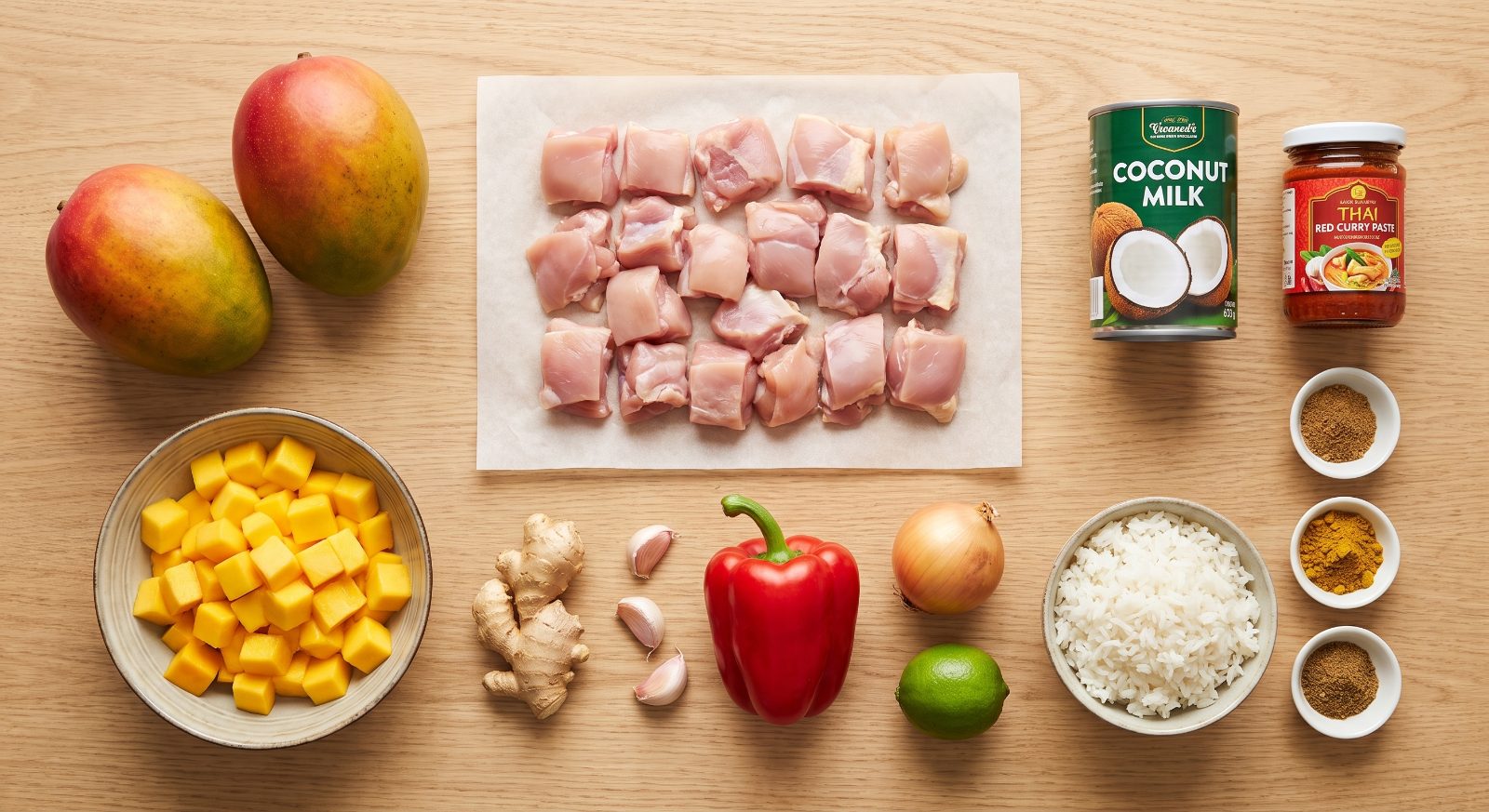
For the curry
- 2 tablespoons coconut oil
- 1 large yellow onion, chopped (about 1 1/2 cups)
- 1 red bell pepper, chopped
- 2 tablespoons fresh ginger, minced
- 2 tablespoons garlic, minced
- 3 tablespoons Thai red curry paste
- 2 teaspoons ground coriander
- 2 teaspoons yellow curry powder
- 1/2 teaspoon ground cumin
- 1 teaspoon fine salt, plus more to taste
- 2 cups ripe mango, diced, divided
- 1 can (13.5 oz) full-fat coconut milk
- 1 1/4 lb boneless skinless chicken thighs, cut into 1-inch pieces
To finish
- Juice and zest of 1 lime
- 1/3 cup fresh cilantro, finely chopped
- 1 tablespoon fish sauce (optional)
- Cooked jasmine or basmati rice, to serve
Ingredient notes & substitutions
- Mango:
- Ataulfo, sometimes sold as honey mango, is sweeter and less fibrous than the common red-green kind. Frozen mango works well and is often riper than what is on the shelf.
- Coconut milk:
- Full-fat, canned, from the international aisle rather than the refrigerated cartons. Shake the can hard before opening — it separates on the shelf.
- Red curry paste:
- Brands differ hugely in heat. Start at 2 tablespoons if you are unsure of yours and add more once the sauce is blended.
- Chicken thighs:
- More forgiving than breast in a simmered sauce. If you use breast, add it later and check it earlier — it overcooks quickly.
- Fresh ginger:
- Fresh, not ground. The two are not interchangeable; ground ginger is warm and dusty where fresh is sharp and bright.
- Lime:
- Added at the end, off the heat. It is the acid that stops the mango and coconut reading as too sweet — do not skip it.
Method
- 1
Heat the coconut oil in a large pot over medium. Add the onion and bell pepper and cook 7-9 minutes until genuinely soft — not just translucent. This is the base of the sauce and rushing it leaves a raw onion edge that blending will not hide.
- 2
Add the ginger and garlic and cook one minute more, until fragrant.
- 3
Add the curry paste, coriander, curry powder, cumin and salt. Stir constantly for 1-3 minutes until the mixture darkens and smells strongly aromatic. Frying the paste in fat rather than dropping it into liquid is the single biggest flavor step in the recipe.
- 4
Add 1 cup of the mango and stir for a minute. Shake the can of coconut milk hard, pour it in, bring to a boil, then drop to a low simmer for 10-15 minutes.
- 5
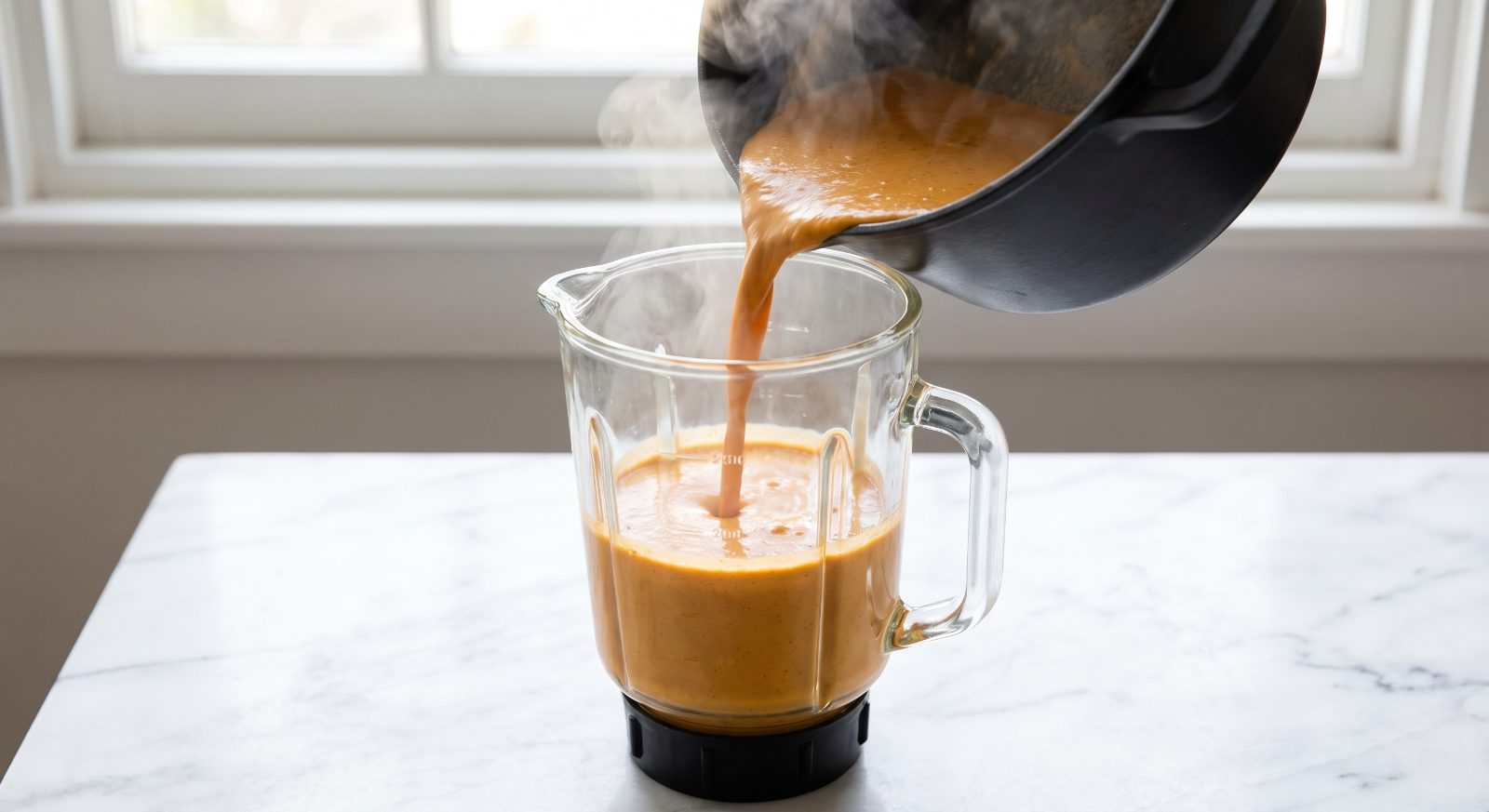
Transfer the sauce carefully to a blender and blend until completely smooth. Hot liquid expands — fill no more than halfway, start on the lowest speed, and hold the lid down with a folded towel rather than sealing it tight. Use the soup setting if your blender has one.
- 6
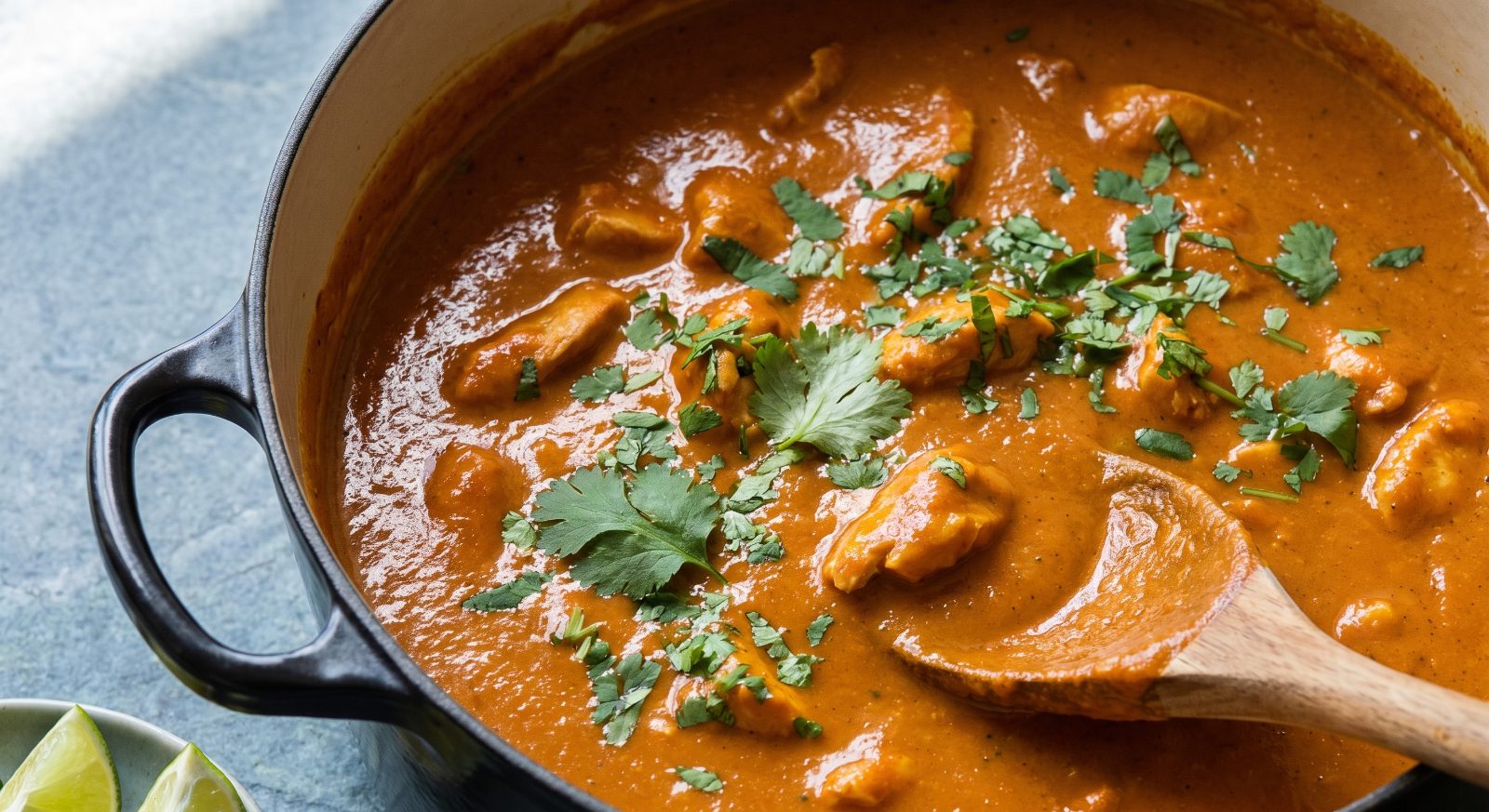
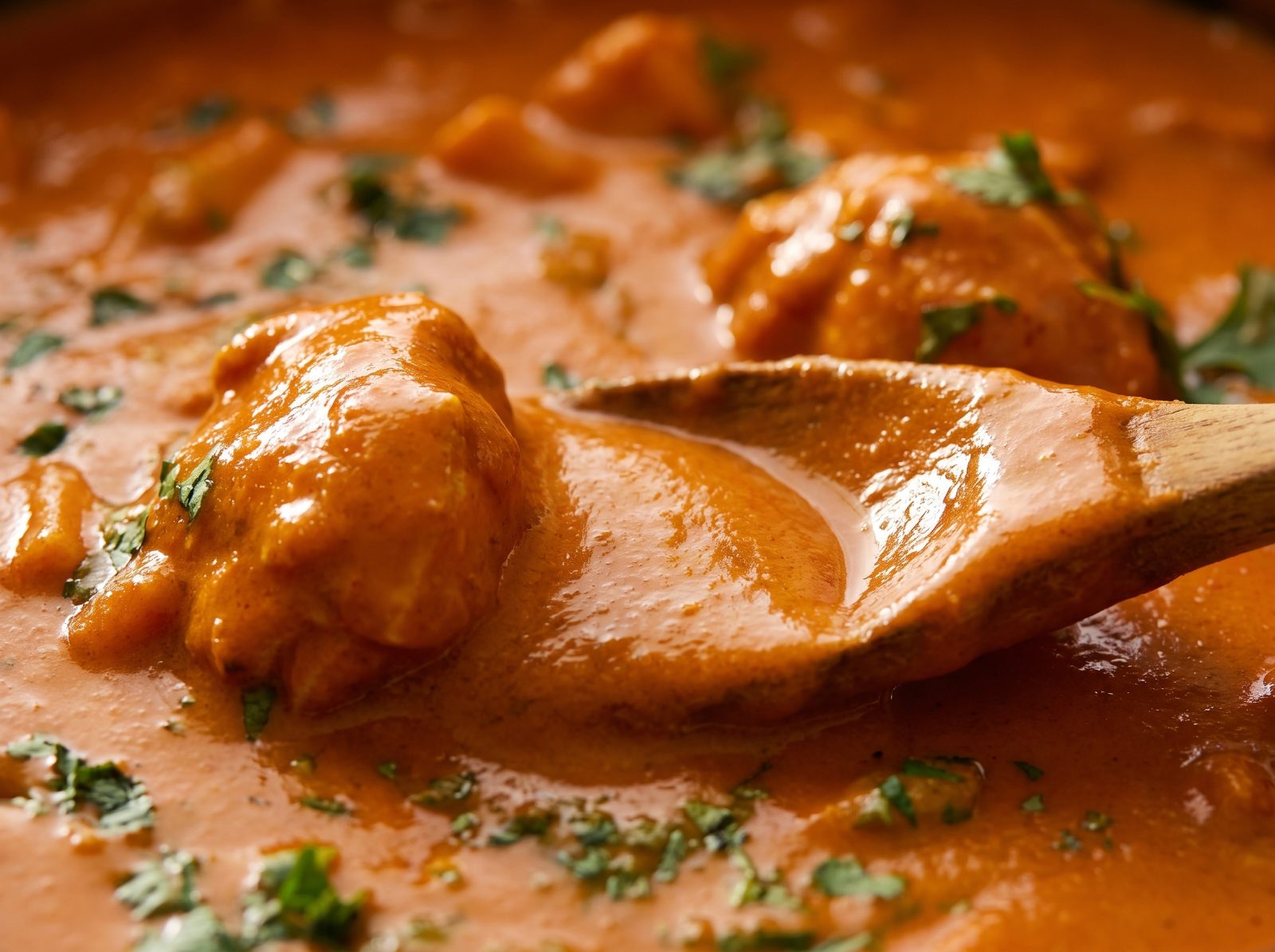
Return the sauce to the pot over medium-low and bring back to a gentle simmer. Add the chicken, stir to coat, cover and cook 12-15 minutes, until the thickest piece is opaque all the way through with no pink at the centre.
- 7
Turn the heat to its lowest setting and stir in the remaining 1 cup of mango, the lime juice and zest, the cilantro and the fish sauce if using.
- 8
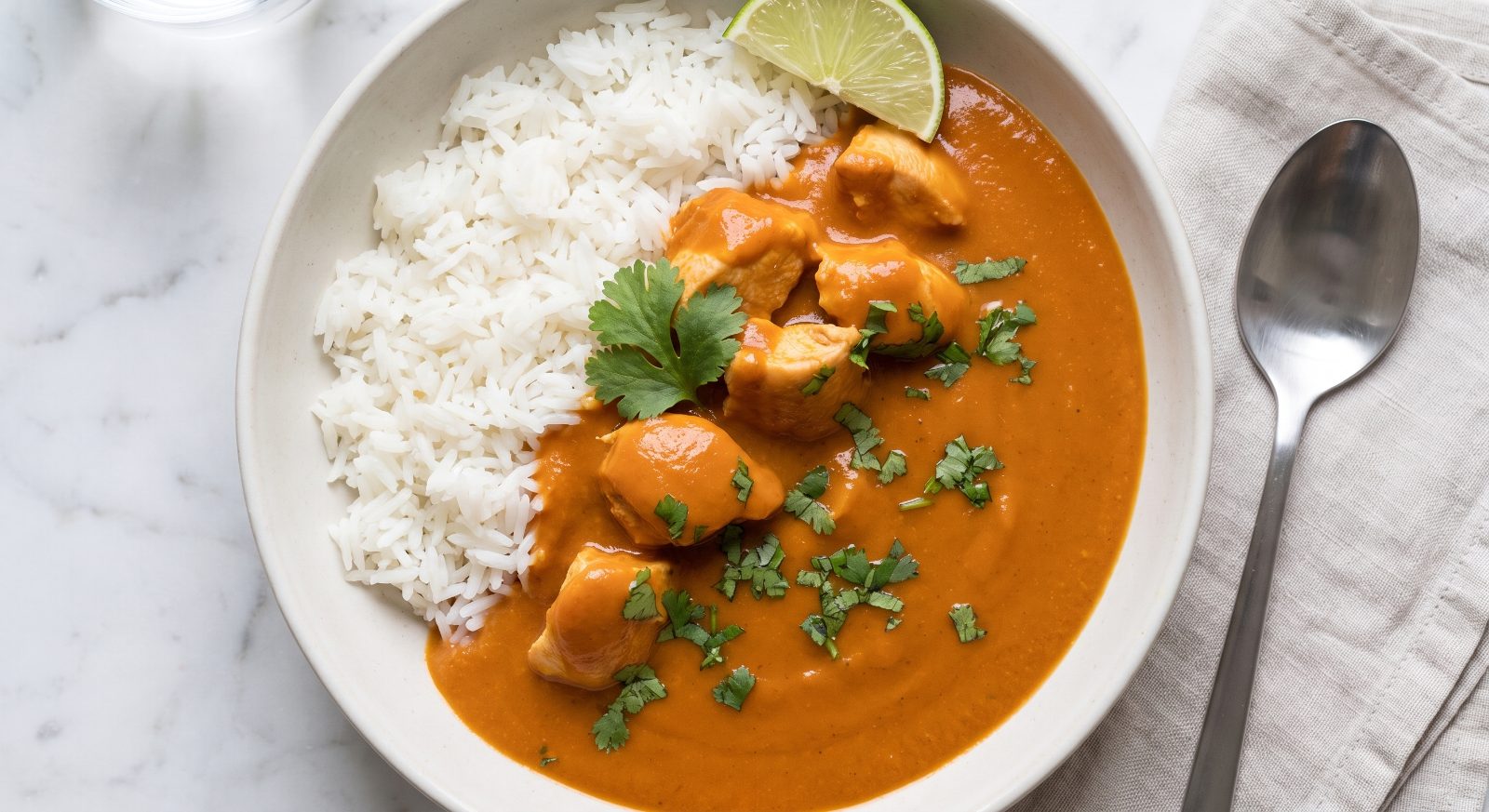
Taste and adjust. If it is too sweet, more lime or fish sauce; if it is flat, salt. Serve over rice.
- 9
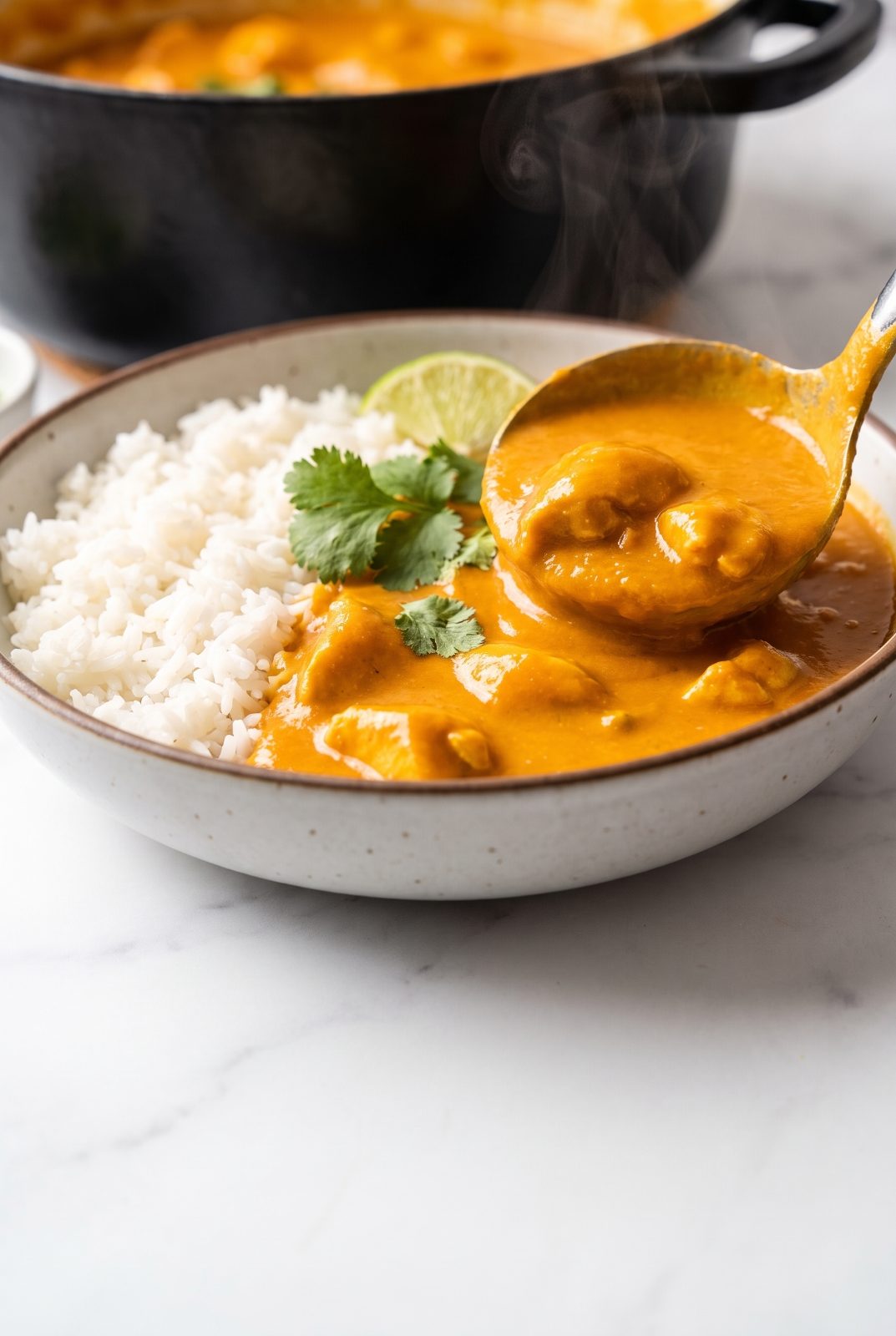
Bon appetit
Tips
- Fry the curry paste and spices in the oil for a full 1-3 minutes before any liquid goes in. Raw paste stirred into coconut milk tastes thin and slightly dusty.
- Blend hot liquid carefully — half-full at most, lid held under a towel, lowest speed to start. Sealed blenders and boiling sauce are how people get burned.
- Curry pastes vary enormously in heat between brands. Start with less than you think and add more at the end.
- Full-fat canned coconut milk only. Light is too thin to make a sauce, coconut cream is too thick, and cream of coconut is a sweetened dessert product.
- Thighs are more forgiving than breast here — they stay tender through a simmer where breast goes stringy.
Variations to try
- Vegetarian: chickpeas and cubed sweet potato in place of the chicken, with vegetable broth loosening the sauce.
- Shrimp: add 1 lb raw shrimp in the last 4-5 minutes instead of the chicken.
- Hotter: a sliced red chili with the onion, or a spoonful more curry paste.
- Vegetables: red bell pepper, snap peas or green beans in the last 5 minutes for texture.
- Richer: 2 tablespoons cashew butter blended into the sauce.
Storage & make-ahead
Refrigerate up to 4 days in an airtight container — curries of this kind genuinely improve after a night. Reheat gently over low heat, loosening with a splash of broth or coconut milk as the sauce thickens in the fridge. Freeze up to 3 months, thaw fully in the fridge, and reheat on the stovetop rather than the microwave, which tends to split coconut sauces. Rice is better cooked fresh.
Frequently asked questions
- Is this spicy?
- Mildly, as written, but it depends entirely on your curry paste — brands range from gentle to genuinely hot. Start with less, blend the sauce, then taste and add more.
- Can I use frozen mango?
- Yes, and it is often better than underripe fresh fruit. Chop the second cup smaller, since frozen chunks tend to be large.
- Do I have to blend the sauce?
- No, but blending is what makes this different from other mango curries. Unblended you get a chunkier sauce with sweetness in pockets rather than throughout.
- Can I use light coconut milk?
- You can, but the sauce will be noticeably thinner and will not coat the chicken the same way. Full-fat is worth it here.
- How do I safely blend hot liquid?
- Fill the jug no more than halfway, remove the centre cap, cover the opening with a folded towel, and start on the lowest speed. Sealing hot liquid in a blender builds steam pressure and can force the lid off.
- What should I serve it with?
- Jasmine or basmati rice. Naan or roti for mopping. Cashews and extra cilantro on top add crunch and freshness.
Get the recipes first
New comfort food recipes in your inbox — no spam, unsubscribe any time.