Cottage Cheese Egg Bites
Soft, custardy baked egg bites blended with cottage cheese for a silky texture. High protein, twelve to a batch, and they reheat in thirty seconds.
By Hanan · Salt & Hearth
Published August 18, 2026
Full quantities, times and temperatures · How we make this site

Prep
10 min
Cook
25 min
Total
35 min
Serves
12
Be the first to rate this recipe
Tap a star to rate
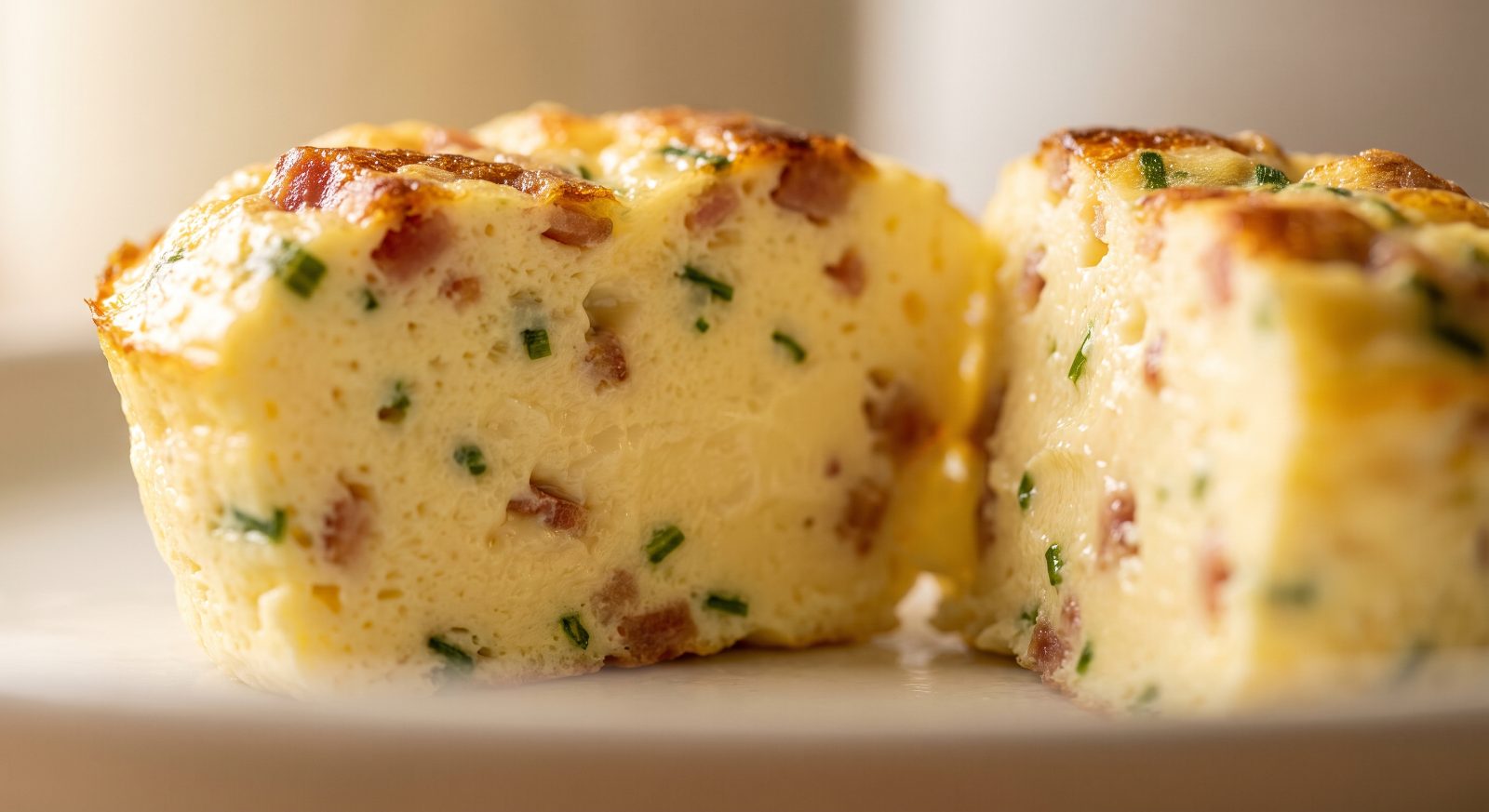
The trick that makes these work is blending the cottage cheese into the eggs until there is no trace of curd left. What you get is a custard rather than a scrambled egg — soft, silky, faintly tangy, and holding together properly rather than crumbling. They bake in a muffin tin, twelve at a time, and they are about as good a make-ahead breakfast as exists: thirty seconds in the microwave and they taste like they did on day one. Each one carries roughly nine grams of protein, which is the other reason they have become popular.
Why you'll love this recipe
- Blending the cottage cheese gives a silky, custardy texture with no curds at all.
- High protein without protein powder or anything unusual.
- Twelve from one batch, and they reheat in 30 seconds.
- Ten minutes of prep, most of which is measuring.
- Endlessly variable — change the add-ins and you have a different breakfast.
Ingredients
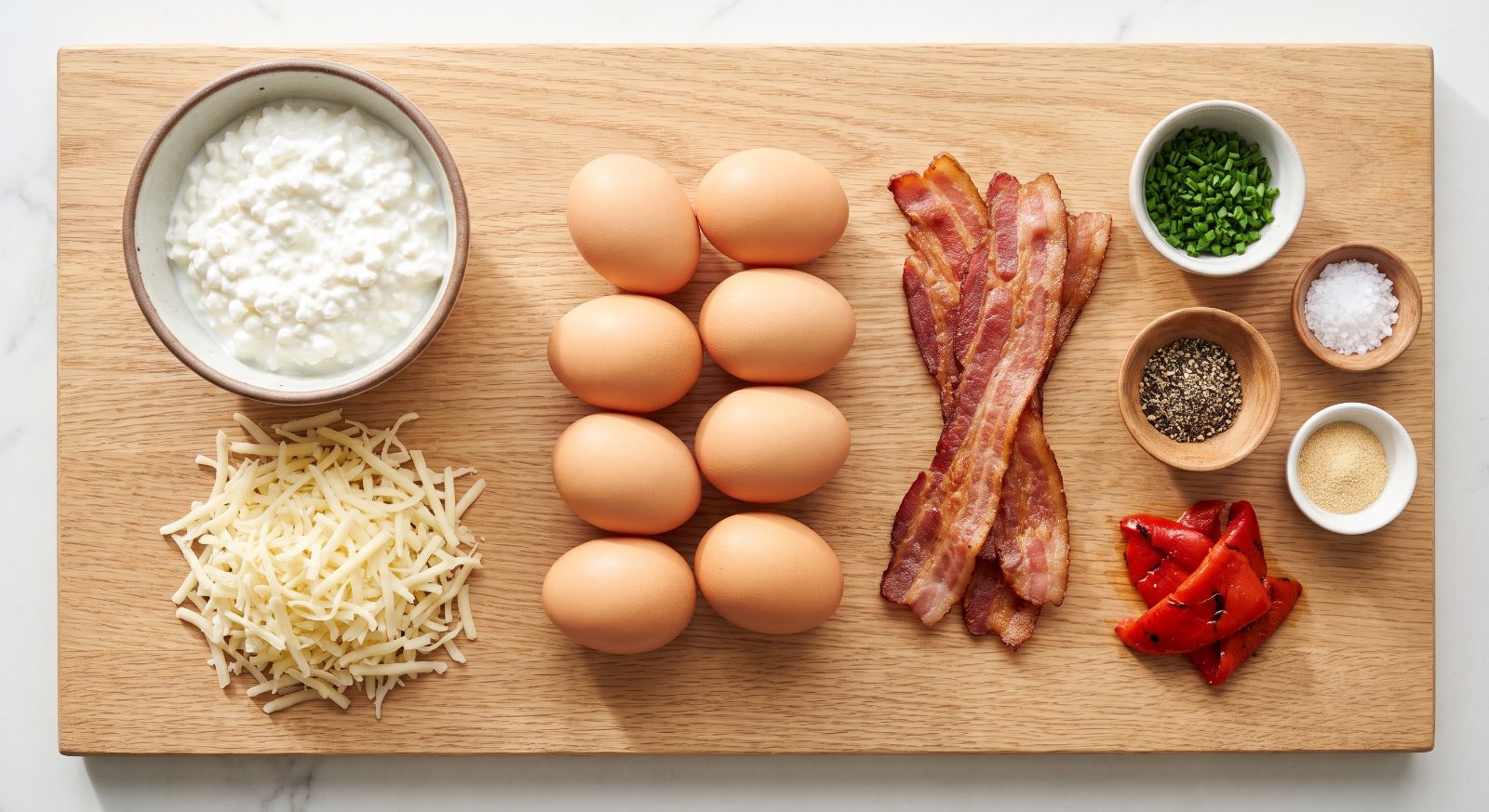
For the egg bites
- 8 large eggs
- 1 cup (225 g) full-fat cottage cheese
- 1/2 cup shredded Gruyère or sharp cheddar
- 1/2 teaspoon fine salt
- 1/4 teaspoon black pepper
- 1/4 teaspoon garlic powder
Add-ins (choose one or mix)
- 4 slices bacon, cooked and crumbled
- 1/2 cup baby spinach, finely chopped
- 1/2 cup roasted red pepper, chopped
- 2 tablespoons fresh chives, chopped
Ingredient notes & substitutions
- Cottage cheese:
- Full-fat, and it must be blended smooth. Low-fat versions hold more water and give a looser, weepier bite.
- Eggs:
- Eight large eggs to one cup of cottage cheese is the ratio that sets firmly without going rubbery.
- Gruyère:
- Melts smoothly and has enough character to carry the bite. Sharp cheddar is the easy substitute.
- Low oven:
- Not an ingredient, but the most important variable. 325F keeps them custardy; anything hotter makes them puff and collapse.
- Add-ins:
- Keep them finely chopped and roughly half a cup total. Too much filling stops the custard setting around it.
Method
- 1
Heat the oven to 325F. Grease a 12-cup muffin tin very thoroughly, including the top surface between the cups — egg sticks to anything you miss. Silicone moulds are easier still.
- 2
Blend the eggs, cottage cheese, salt, pepper and garlic powder in a blender for 30-40 seconds, until completely smooth with no visible curds. This blending step is the entire recipe: unblended cottage cheese stays lumpy, blended it turns the bites silky and custardy.
- 3
Stir in the shredded cheese by hand rather than blending it, so it stays in distinct melty pockets.
- 4
Divide your add-ins between the muffin cups, then pour the egg mixture over, filling each cup about three-quarters full. They rise as they bake and sink back as they cool.

- 5
Bake 22-26 minutes, until the centres are just set and barely wobble. Low and slow at 325F is what keeps them tender — a hot oven makes them puff dramatically and then collapse rubbery.

- 6
Cool in the tin 5 minutes, then run a thin knife around each one and lift out. They release far more easily after a short rest than straight from the oven.
- 7
bon appetit

Tips
- Blend the cottage cheese properly — 30 seconds minimum. Any remaining curds show up as lumps in the finished bite.
- Grease the tin more thoroughly than feels necessary, or use silicone. Egg sticks ferociously.
- Bake at 325F, not higher. Low heat is what gives the custardy texture.
- Fill only three-quarters full. They rise, then settle.
- Expect them to sink slightly as they cool. That is normal and not a fault.
Variations to try
- Bacon and chive is the classic; roasted red pepper and feta is the best vegetarian version.
- Add finely chopped sun-dried tomato and basil for something Mediterranean.
- Stir in a spoonful of pesto per cup before pouring the egg over.
- Use ham and Swiss for a bite that tastes like a croque monsieur.
Storage & make-ahead
Refrigerate in an airtight container for up to 5 days. Reheat individually in the microwave for 25-35 seconds — longer and they turn rubbery. To freeze, cool completely, freeze on a tray until firm, then bag for up to 2 months; reheat from frozen for about 60 seconds. They release water as they thaw, so a paper towel underneath helps.
Frequently asked questions
- Why are my egg bites rubbery?
- The oven was too hot or they baked too long. 325F and pulling them while the centres just barely wobble is what keeps them tender.
- Can I taste the cottage cheese?
- Barely — it reads as a gentle tang and richness rather than as cottage cheese, provided you blend it completely smooth.
- Why did they stick to the tin?
- Under-greased. Egg needs far more grease than most batters, and silicone moulds solve it entirely.
- Can I use egg whites only?
- You can, but they set much firmer and lose the custardy quality. Try six whole eggs plus four whites as a compromise.
Get the recipes first
New comfort food recipes in your inbox — no spam, unsubscribe any time.