Coffee Cinnamon Rolls
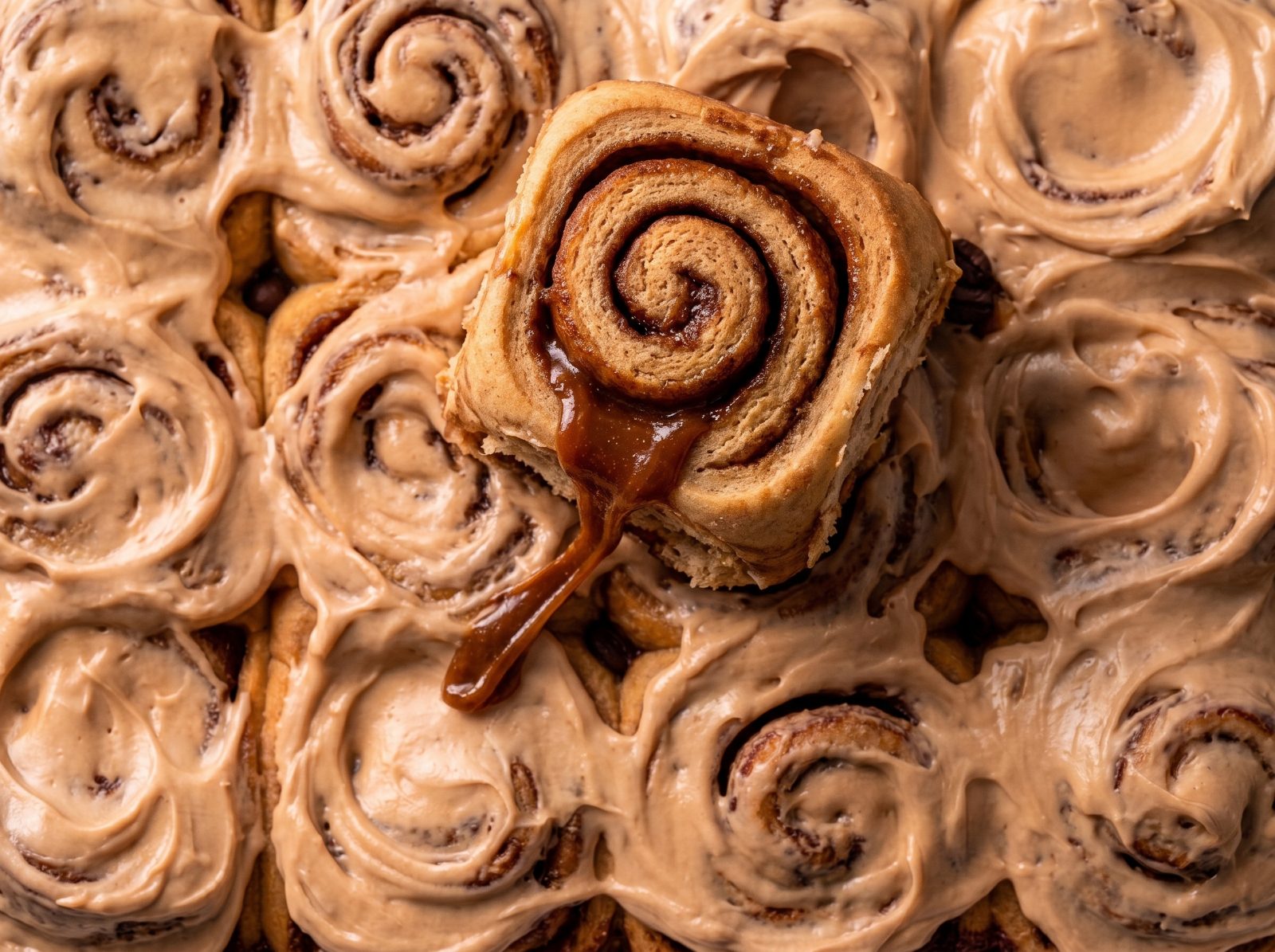
Soft yeast rolls with an espresso brown sugar filling, baked over a sticky coffee caramel so the bottoms turn gooey, then finished with espresso cream cheese frosting.
By Hanan · Salt & Hearth
Published August 12, 2026
Full quantities, times and temperatures · How we make this site
Prep
60 min
Cook
32 min
Total
92 min
Serves
12
Be the first to rate this recipe
Tap a star to rate
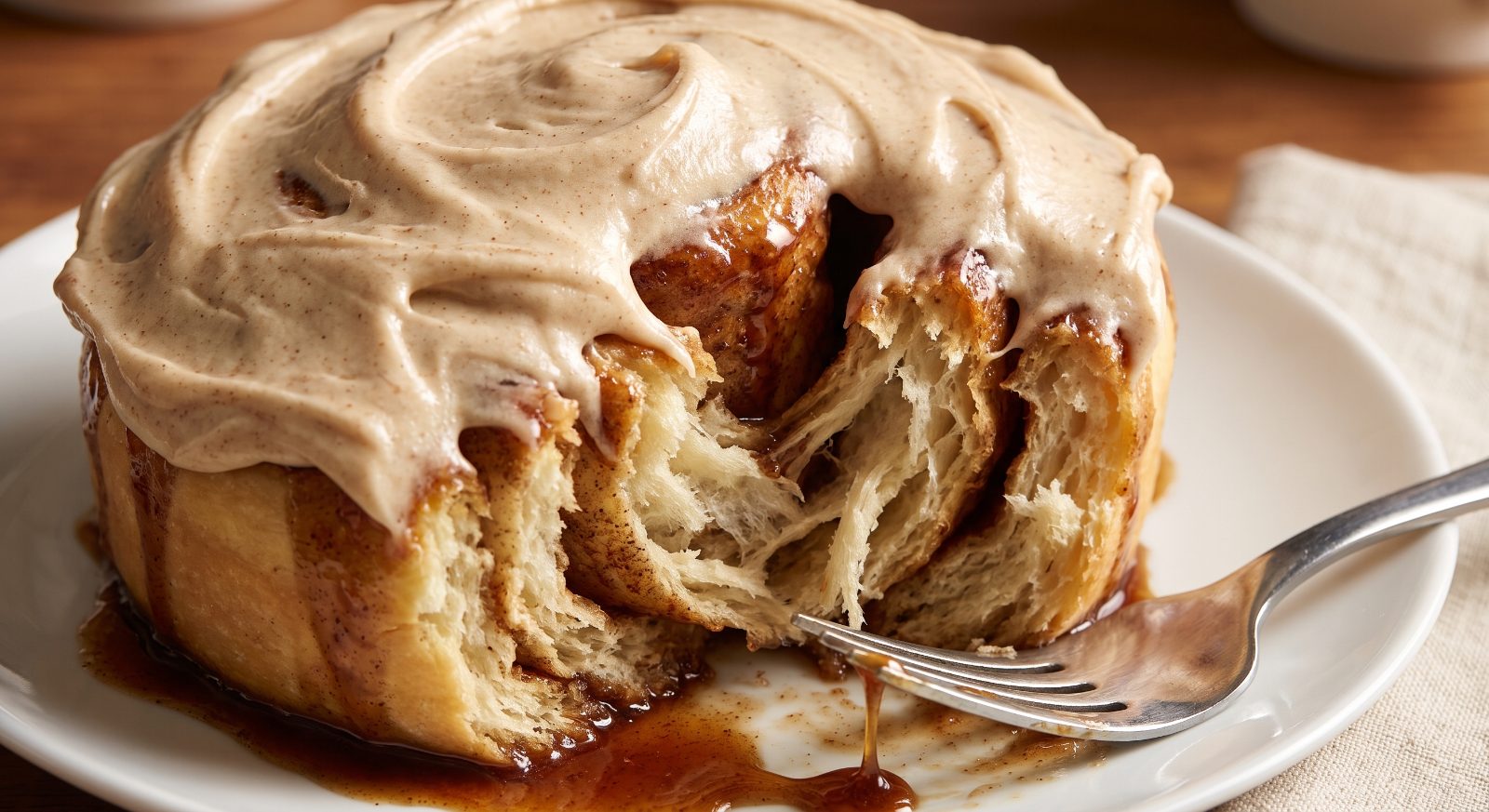
These take a coffee flavor further than a spoonful of espresso in the frosting. It goes into the dough, into the brown sugar filling, into a caramel poured under the rolls before they bake, and into the cream cheese frosting on top. The caramel underneath is the part worth planning for — it bubbles up around the sides as they bake and leaves the bottoms sticky rather than dry.
Why you'll love this recipe
- Coffee in four separate components, so the flavor is genuinely present rather than a hint.
- The caramel base makes the bottoms sticky and gooey in a way plain cinnamon rolls never are.
- Shape them the night before and bake in the morning.
- Twelve generous rolls from one 9x13 dish.
- Working with yeast dough is satisfying in a way few quick recipes are.
Ingredients
For the dough
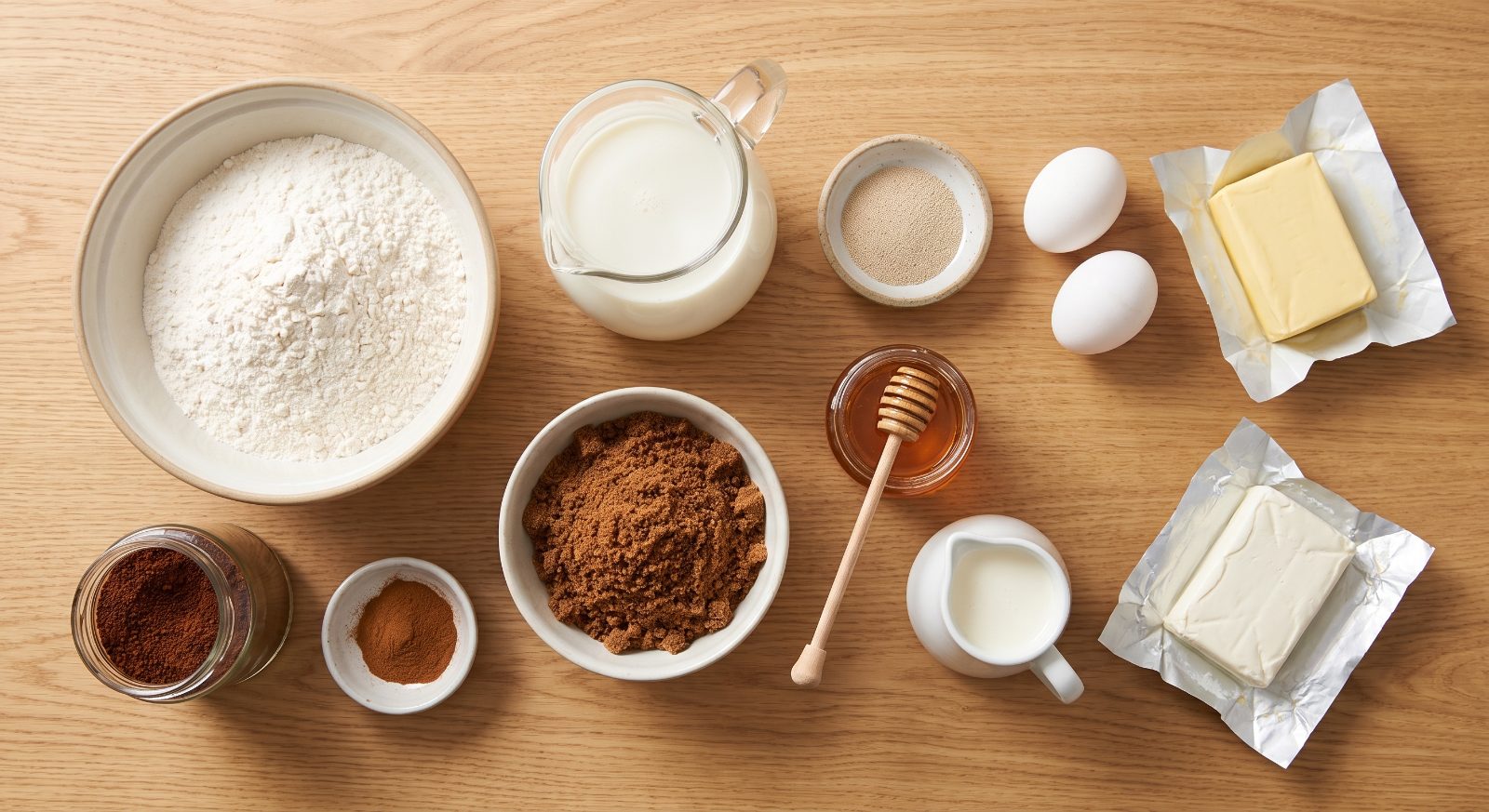
- 1 1/4 cups (300 ml) whole milk, warmed to 110°F
- 2 1/4 teaspoons active dry yeast
- 1 teaspoon granulated sugar, to bloom the yeast
- 4 3/4 cups (593 g) all-purpose flour, spooned and levelled
- 1 1/2 teaspoons fine salt
- 2 tablespoons (28 g) dark brown sugar
- 1 tablespoon vanilla extract
- 1 1/2 tablespoons (6 g) instant espresso powder
- 2 large eggs, whisked
- 1/2 cup (112 g) unsalted butter, softened
For the coffee caramel base
- 1/2 cup (112 g) unsalted butter, very soft
- 1 cup (220 g) dark brown sugar, packed
- 1/3 cup (116 g) honey
- 3 tablespoons (45 ml) heavy cream
- 1 tablespoon (4 g) instant espresso powder
- 1/2 tablespoon vanilla extract
- 1/2 teaspoon cinnamon
- 1/4 teaspoon fine salt
For the filling
- 1/2 cup (112 g) unsalted butter, very soft
- 1 cup (220 g) dark brown sugar, packed
- 2 teaspoons cinnamon
- 2 tablespoons (8 g) instant espresso powder
- 1 tablespoon vanilla extract
- 1/4 teaspoon fine salt
- 1/4 cup (60 ml) heavy cream, room temperature, for pouring between the rolls
For the espresso cream cheese frosting
- 6 tablespoons (84 g) unsalted butter, very soft
- 6 oz (170 g) cream cheese, cold
- 3/4 cup (97 g) powdered sugar
- 1 1/2 teaspoons (2 g) instant espresso powder
- 1/2 tablespoon vanilla extract
Ingredient notes & substitutions
- Instant espresso powder:
- Not the same as ground coffee, which will not dissolve and leaves grit. Instant espresso powder is designed to dissolve completely.
- Active dry yeast:
- Check the date. Bloomed yeast must go properly foamy — bubbly is not the same as foamy, and dead yeast means dough that never rises.
- Whole milk:
- The fat gives a softer crumb. Warm it to about 110°F: warm on the wrist, not hot.
- Dark brown sugar:
- More molasses than light brown, which is what makes the caramel taste like caramel rather than sweet butter.
- Honey:
- In the caramel base it keeps the sugar from crystallising, so the bottoms stay sticky instead of setting hard.
- Cream cheese:
- Used cold, straight from the fridge, beaten into already-softened butter. Softened cream cheese makes a loose frosting that runs off.
Method
- 1
Stir the yeast and the teaspoon of sugar into the warmed milk and leave 10 minutes until visibly foamy on top. If it only goes slightly bubbly and does not smell yeasty, the yeast is dead — start again, or the dough will never rise.
- 2
In a stand mixer bowl, whisk the flour, salt and brown sugar together. Separately, stir the espresso powder into the vanilla until dissolved — dissolving it in liquid first stops it speckling the dough.
- 3
Add the whisked eggs, softened butter and the vanilla-espresso mixture to the dry ingredients, then pour in the yeast mixture and mix until it comes together.
- 4
Switch to the dough hook and knead on medium 7-10 minutes, until the dough pulls away from the sides, forms a ball and springs back when you press it.
- 5
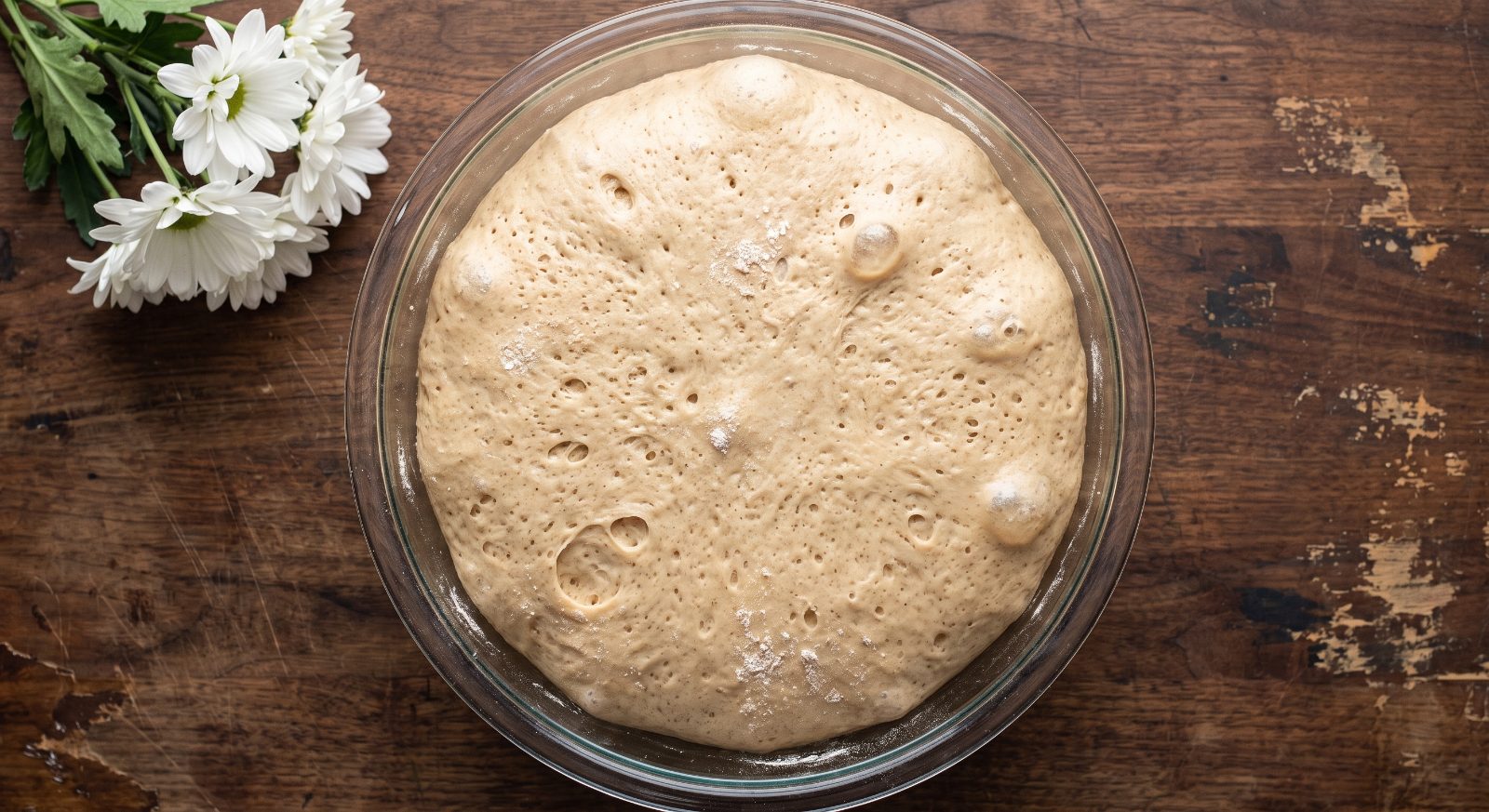
Shape into a ball, put it in a large greased bowl, cover, and leave somewhere warm 1 to 1 1/2 hours until doubled. A turned-off oven with just the light on works well.
- 6
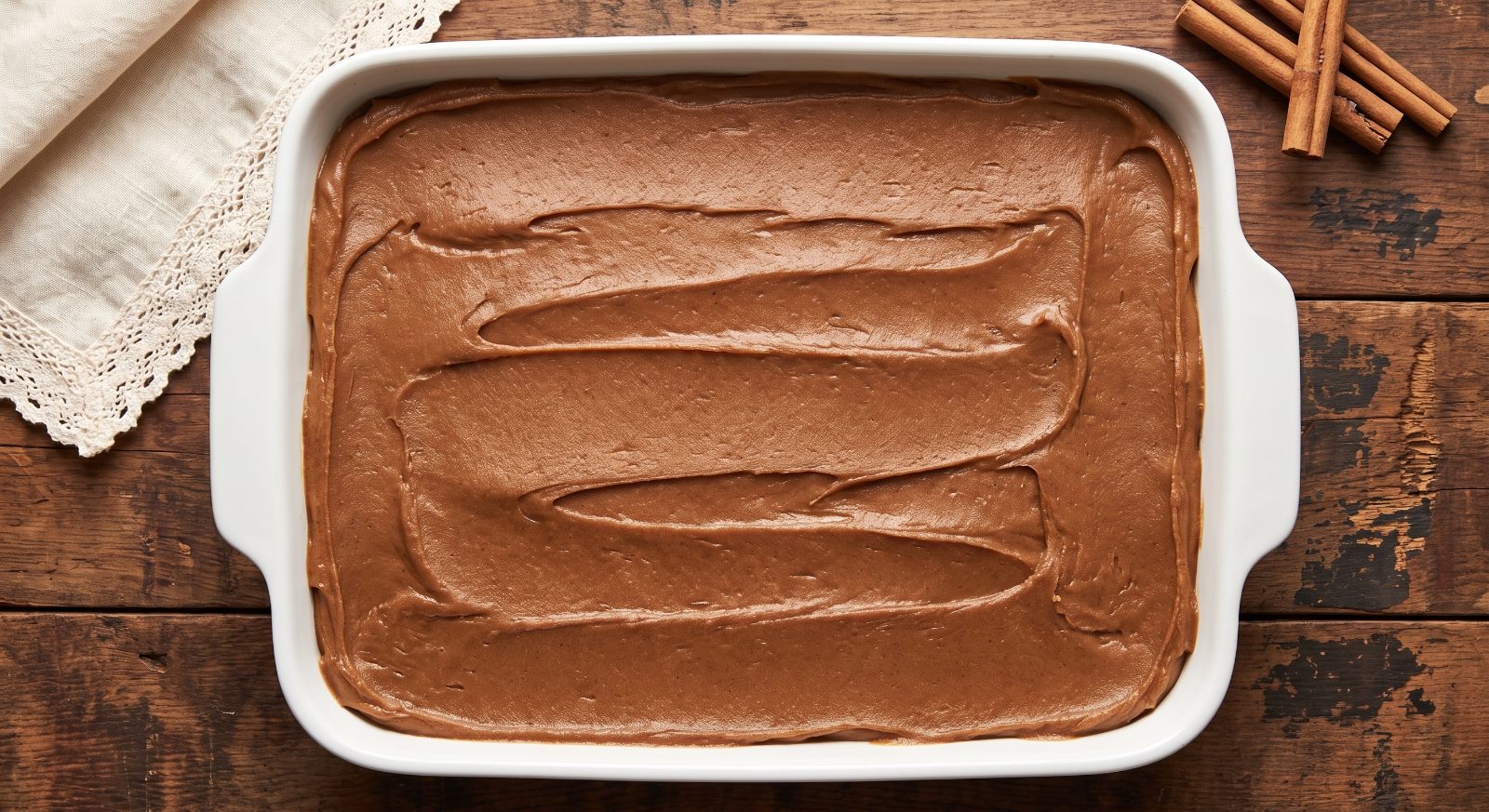
While it rises, make the caramel base: dissolve the espresso powder in the vanilla, then beat it with the butter, brown sugar, honey, cream, cinnamon and salt. Spread it across the bottom of a greased 9x13 dish.
- 7
Make the filling the same way — espresso dissolved in vanilla, then beaten with the butter, brown sugar, cinnamon and salt.
- 8
Punch the risen dough down and roll it on a lightly floured surface into an 18x12 inch rectangle about 1/4 inch thick. Spread the filling right to the edges with an offset spatula.
- 9
Roll up tightly from the long edge into a log. Trim the uneven ends, then cut 12 rolls about 1 1/2 inches wide. Use unflavoured dental floss — slide it under, cross the ends over the top and pull. A knife squashes the spiral flat.
- 10
Set the rolls into the caramel-lined dish and pour the room-temperature cream into the gaps between them. Cover and prove about 1 hour until doubled and touching.
- 11
Heat the oven to 350°F and bake 29-34 minutes until golden. Tent with foil for the last 5 minutes if the tops are browning faster than the centres are cooking.
- 12
While they bake, beat the soft butter until pale, beat in the cold cream cheese, sift in the powdered sugar, then add the espresso dissolved in vanilla.
- 13
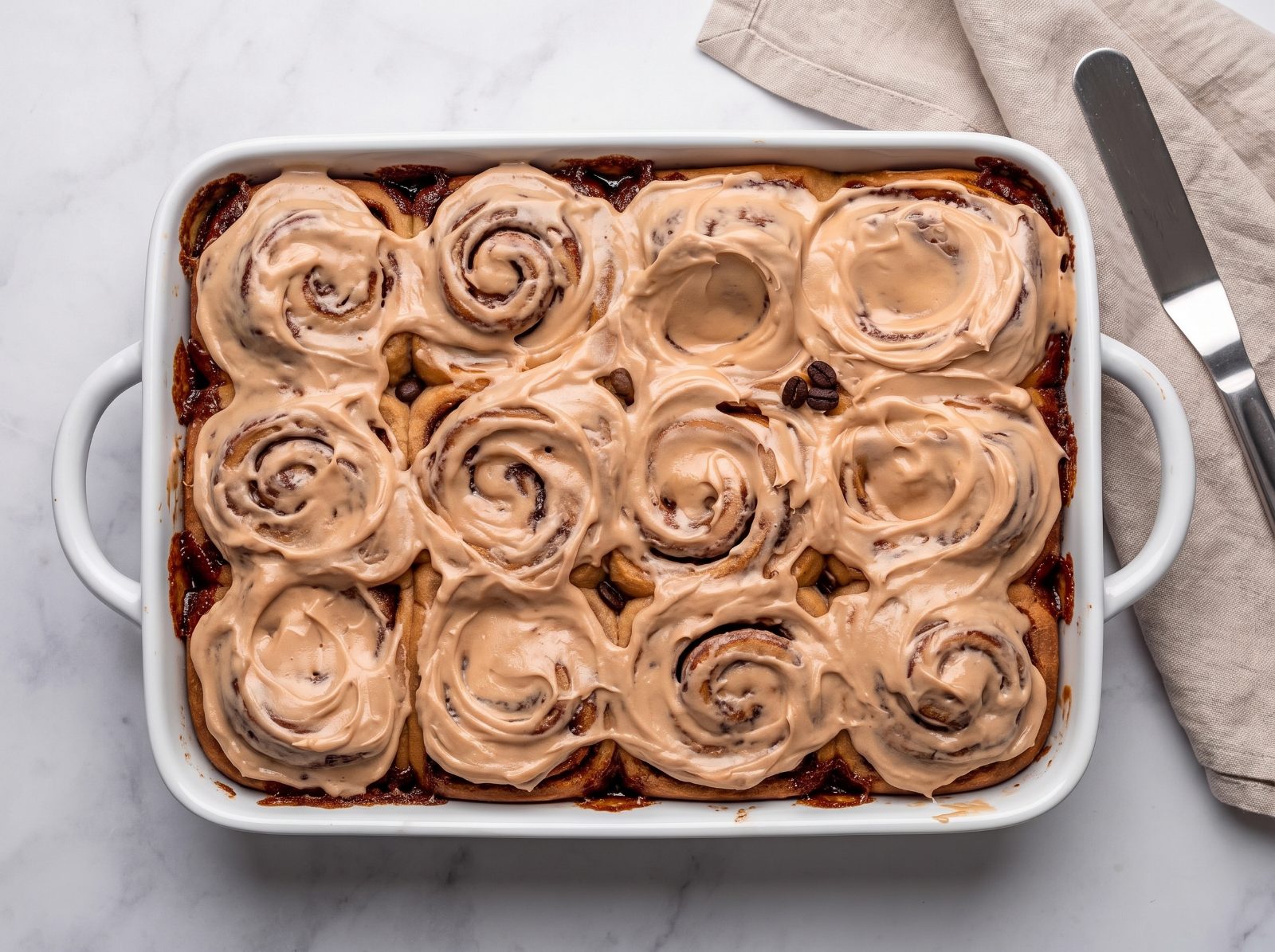
Cool 10 minutes, then spread the frosting over the rolls while still warm so it melts partway down the sides. Serve.
Watch how it's made
Tips
- Weigh the flour if you possibly can. Scooping a cup straight into the bag compacts it and can add 20% more flour than intended, which is the usual reason enriched dough bakes up dense.
- Always dissolve the espresso powder in the vanilla first. Added dry it stays as bitter dark specks rather than flavor running through evenly.
- Cut with dental floss, not a knife. A blade drags and flattens the spiral; floss gives clean round rolls.
- Test the milk temperature. Around 110°F is right — much hotter and you kill the yeast, much cooler and it stays sluggish.
- Grease the plastic wrap before covering the proving rolls, or the risen tops stick and tear when you pull it off.
Variations to try
- Mocha: 2 tablespoons cocoa powder in the filling and a handful of chocolate chips before rolling.
- Pecan: 1 cup toasted chopped pecans scattered over the caramel base before the rolls go in.
- Cardamom: 1 teaspoon ground cardamom in the filling alongside the cinnamon.
- Maple: maple syrup in place of the honey in the caramel.
- Decaf: decaffeinated instant espresso works identically if these are for the evening.
Storage & make-ahead
Best on the day they are baked, while the caramel is still soft. Keep covered at room temperature up to 2 days, or refrigerated up to 4 — bring back to room temperature and warm 10-15 seconds in the microwave, which loosens the caramel again. Freeze baked and unfrosted up to 2 months, wrapped tightly; thaw, warm through and frost. To bake in the morning, shape the rolls into the caramel-lined dish, cover and refrigerate overnight, then pour in the cream and prove somewhere warm until doubled — expect this to take well over an hour from cold.
Frequently asked questions
- Can I prepare these the night before?
- Yes. Build them right up to the second prove, cover and refrigerate overnight. In the morning pour the cream between them and prove somewhere warm until doubled. It takes considerably longer than an hour because the dough has to come up to room temperature first.
- Why did my dough not rise?
- Almost always dead yeast — if it did not go properly foamy when bloomed, it was gone before you started. Failing that, the spot was too cool, or the milk was hot enough to kill it. Some doughs simply need 1 1/2 hours.
- Can I use ground coffee instead of espresso powder?
- No. Ground coffee does not dissolve and leaves grit throughout the dough and frosting. Instant espresso powder, or instant coffee granules at a push.
- Why pour cream between the rolls?
- It bakes into the caramel at the base and keeps the bottoms soft and gooey. Skip it and they are noticeably drier underneath.
- How do I know when they are done?
- Deep golden on top and 190°F in the centre of a middle roll if you have a thermometer. The middle rolls finish last, so judge by those rather than the edges.
- Can I halve the recipe?
- Yes — halve everything and use an 8x8 dish for 6 rolls. Timings stay roughly the same, though check 5 minutes early.
Get the recipes first
New comfort food recipes in your inbox — no spam, unsubscribe any time.