Chicken Katsu Bento Box
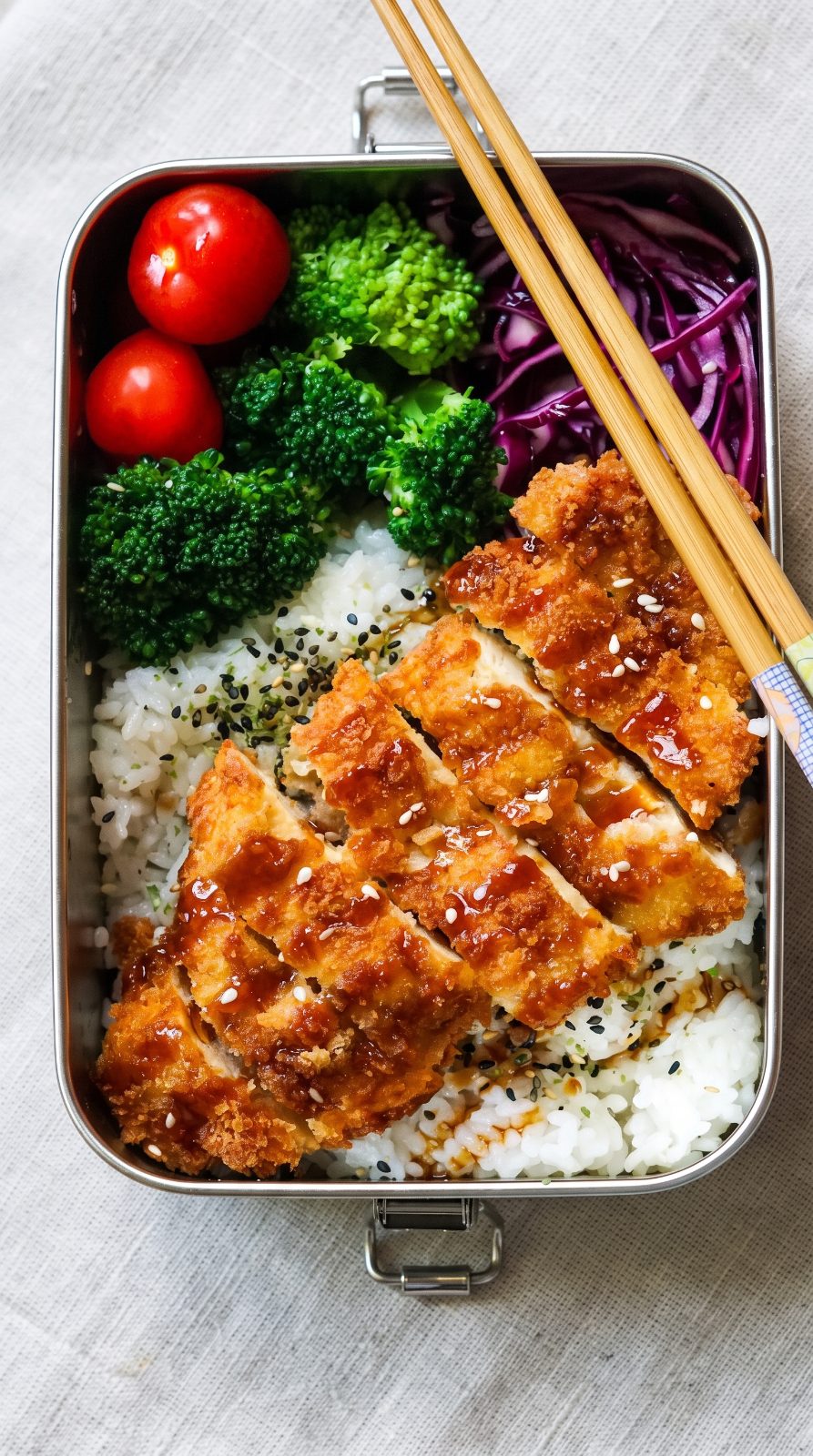
Crispy golden chicken katsu sliced over a bed of furikake rice, with blanched sesame broccoli, tangy pickled red cabbage and fresh cherry tomatoes, finished with a drizzle of sweet-savory tonkatsu sauce. A balanced, beautiful Japanese bento that comes together in 35 minutes and packs perfectly for school, work or lunch at home.
By Hanan · Salt & Hearth
Published July 23, 2026 · Updated July 27, 2026
Full quantities, times and temperatures · How we make this site
Prep
15 min
Cook
20 min
Total
35 min
Serves
2
Be the first to rate this recipe
Tap a star to rate
This is the bento box that makes everyone at the lunch table jealous — crispy panko-crusted chicken katsu, sliced into strips so every bite gets that shatter-crunch crust, sitting over furikake-flecked rice with little pops of savory-tangy-fresh from the pickled cabbage, sesame broccoli and cherry tomatoes. It's the kind of meal that tastes like a Japanese lunch counter but comes together at home in about 35 minutes, using a pan, a pot of boiling water and whatever bento box or divided container you've got. The tonkatsu sauce drizzle is what ties it all together, but keeping it in its own little cup until eating time is the trick that keeps the crust crackly instead of soggy. Make it for a weeknight dinner plated warm, or pack it cold the night before for school or work — either way you get protein, veggies and rice in one tidy, good-looking box.
Why you'll love this recipe
- Shatter-crisp crust without deep-frying a huge batch
- Balanced protein, veggie and rice in one box
- Packs and travels well for school or work lunches
- Ready in about 35 minutes start to finish
- Tangy pickled cabbage cuts the richness perfectly
Ingredients
Chicken katsu
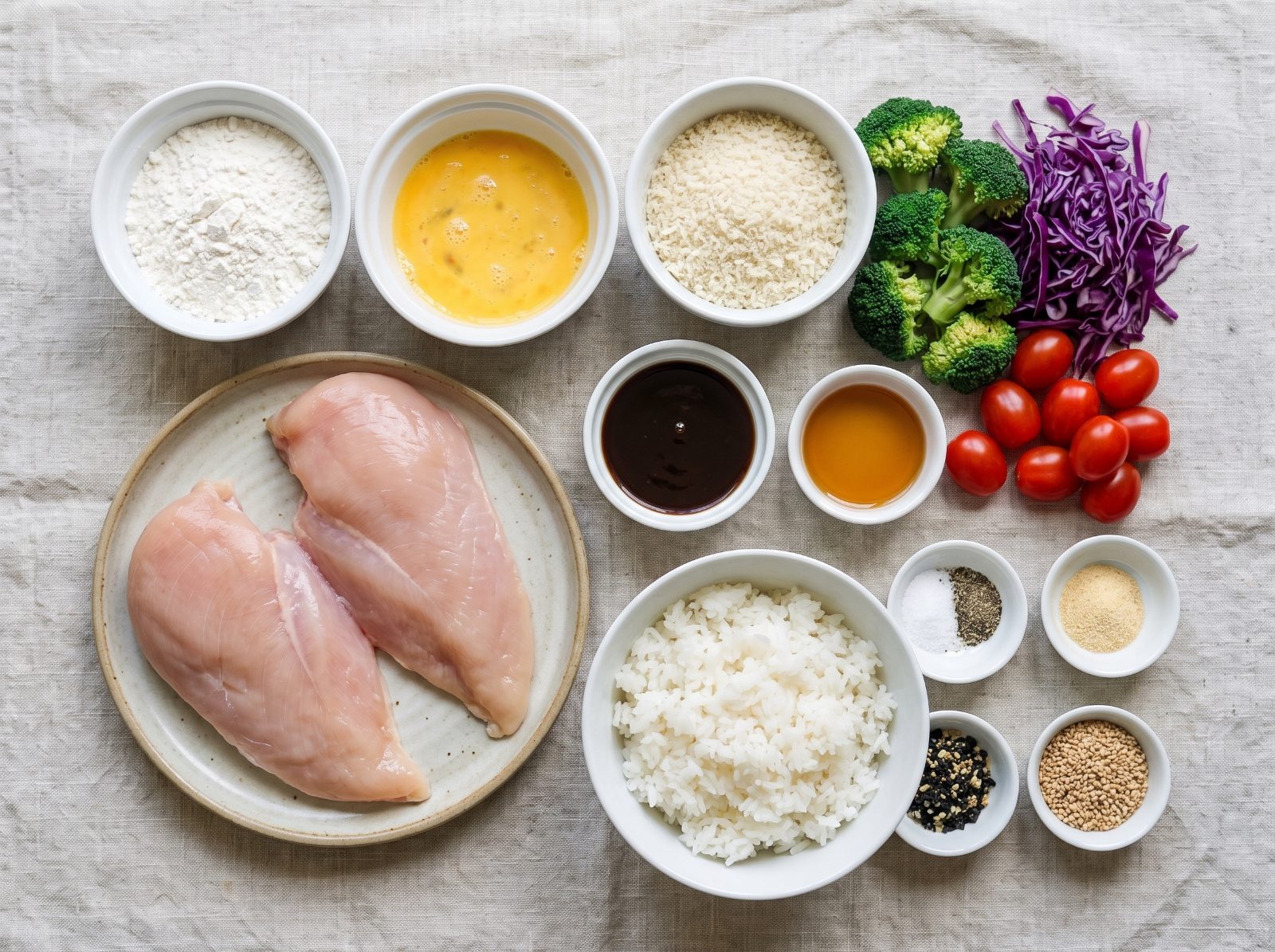
- 2 small chicken breasts (about 6 oz each), pounded thin
- 1/4 cup all-purpose flour
- 1 large egg, beaten
- 1 cup panko breadcrumbs
- 1 cup vegetable oil, for frying
- 3/4 tsp salt
- 1/4 tsp pepper
- 1/4 tsp garlic powder
Sides
- 1 cup cooked short-grain rice
- 1 tbsp furikake
- 1/2 cup broccoli florets
- 1 tsp sesame oil
- 1 tsp sesame seeds
- 1/4 cup red cabbage, thinly shredded
- 1 tbsp rice vinegar
- 4–6 whole cherry tomatoes
To finish
- 1 tbsp tonkatsu sauce
Ingredient notes & substitutions
- Chicken breasts:
- Pound them to an even 1/2-inch thickness so they cook through fast and stay juicy under that crispy crust.
- Panko breadcrumbs:
- Panko's larger, airier flakes give katsu its signature crunch — regular breadcrumbs will fry up denser and less crispy.
- Short-grain rice:
- Short-grain (or sushi) rice has the stickiness that holds furikake and packs neatly into a bento; long-grain rice will feel drier and crumblier.
- Furikake:
- This Japanese rice seasoning (usually seaweed, sesame and sometimes bonito) adds savory flavor with zero extra work — find it in the international aisle or swap in toasted sesame seeds plus a pinch of salt in a pinch.
- Tonkatsu sauce:
- This thick, tangy-sweet sauce is the classic katsu partner; if you can't find it, whisk together ketchup, Worcestershire sauce and a touch of soy sauce and sugar as a close stand-in.
- Red cabbage:
- A quick 10-15 minute soak in rice vinegar mellows its bite and turns it a vivid pink, so slice it thin for the best quick-pickle texture.
Method
- 1
Pound the chicken breasts to an even thickness and season with the salt, pepper and garlic powder.
- 2
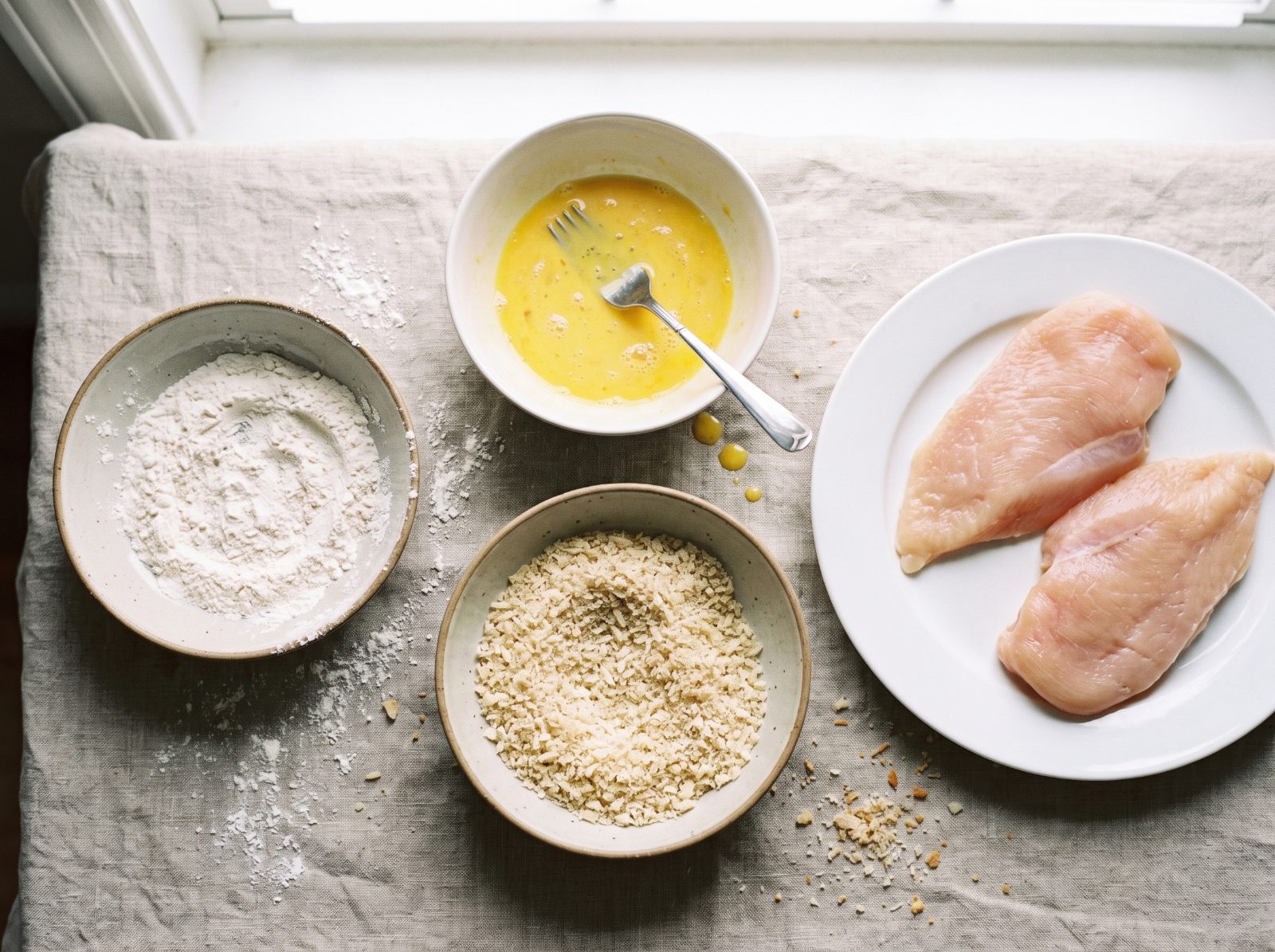
Set up a breading station — flour in one dish, beaten egg in a second, panko in a third. Dredge each piece in flour, dip in egg, then press into the panko to coat.
- 3
Heat the oil in a pan over medium heat (about 350°F/175°C). Fry the chicken 3–4 minutes per side until golden and cooked through (165°F/75°C inside). Rest on a paper towel, then slice into strips. (Air fry at 375°F/190°C or bake at 400°F/200°C for 15–20 minutes, flipping halfway, if you prefer.)
- 4
Fluff the cooked rice and sprinkle with furikake.
- 5
Toss the shredded red cabbage with the rice vinegar (and a pinch of sugar or salt) and let it pickle 10–15 minutes, then drain.
- 6
Blanch the broccoli in boiling salted water 1–2 minutes, plunge into ice water, drain very well, and toss with sesame oil and sesame seeds.
- 7
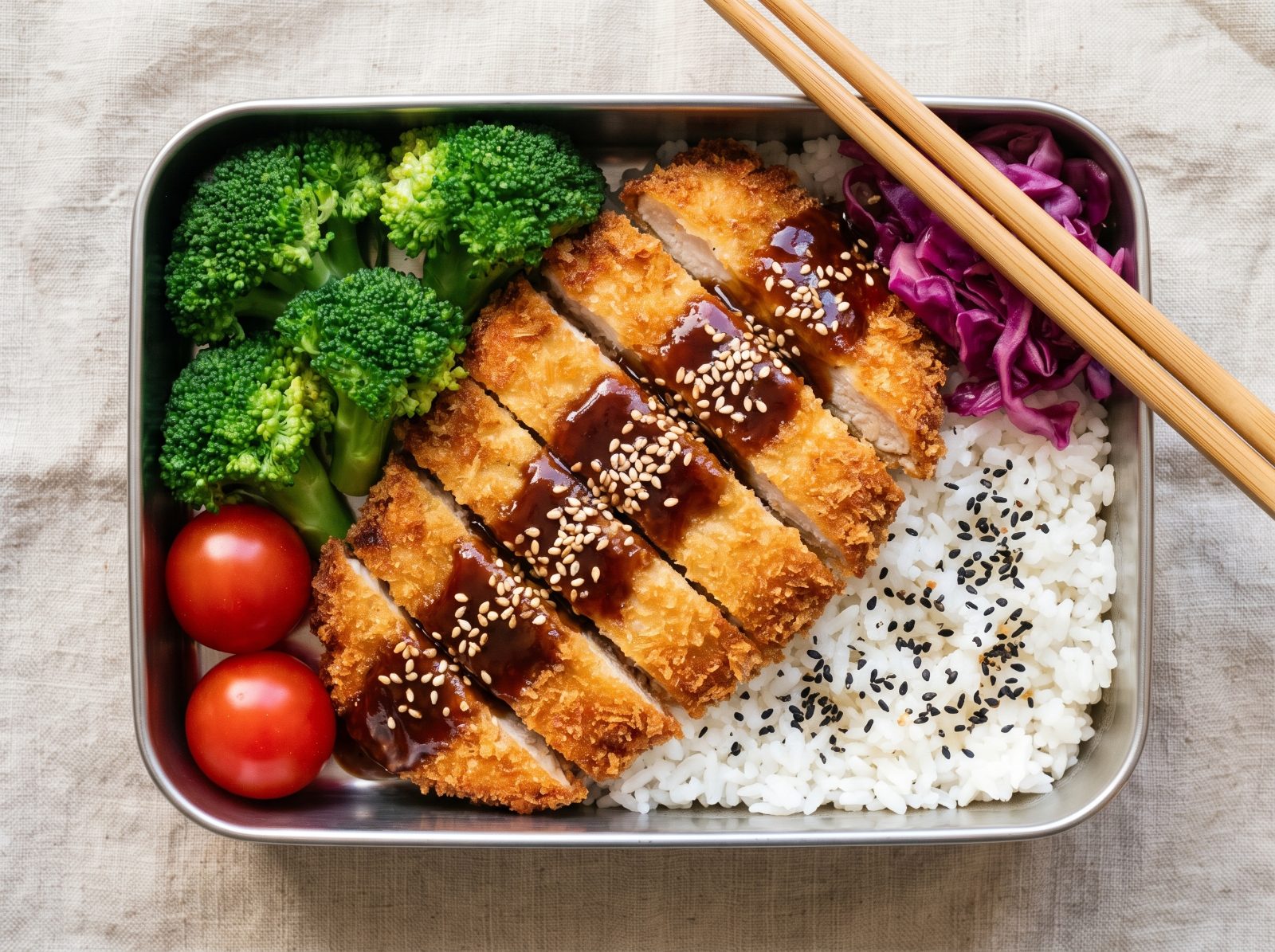
Pack the furikake rice into one section of the box and lay the sliced katsu on top or beside it.
- 8
Add the sesame broccoli, drained pickled cabbage and whole cherry tomatoes in separate sections. Drizzle the katsu with tonkatsu sauce (or pack it in a separate cup). Serve warm, or cool completely before closing the lid to pack.
Tips
- For bento, wrap the fried katsu in a paper towel to absorb moisture and keep the crust from going soggy, and pack the tonkatsu sauce separately — add it right before eating.
- Drain the pickled cabbage and broccoli well; pooling liquid is what makes a bento spoil.
- If packing to eat later, cool everything fully, refrigerate, and keep it cold until lunch — chicken shouldn't sit out more than 2 hours.
Variations to try
- Swap the chicken for pork loin cutlets for a classic tonkatsu-style katsu
- Bake or air fry instead of pan-frying (400°F/15-20 min or 375°F air fryer) for a lighter version
- Use cauliflower rice or a mix of cauliflower and short-grain rice for a lower-carb bento
- Add a soft-boiled egg or edamame in place of the cherry tomatoes for extra protein
- Make it gluten-free with gluten-free panko and a gluten-free tonkatsu sauce or tamari-based swap
Storage & make-ahead
Store the components separately in airtight containers in the fridge for up to 3 days — keep the katsu, rice, broccoli, cabbage and sauce apart so nothing gets soggy. To reheat, warm the sliced chicken in a 375°F oven or air fryer for a few minutes to bring back the crunch (microwaving will soften the crust). The chicken katsu also freezes well breaded but unfried; freeze on a tray, then transfer to a bag and fry straight from frozen, adding an extra minute or two per side. If packing the bento the night before, cool every component completely before sealing the box, and keep it refrigerated until it's time to eat.
Frequently asked questions
- Why is my katsu crust soggy by lunchtime?
- It's almost always trapped moisture — make sure the chicken is patted dry before breading, rest it on a paper towel after frying, and never add the tonkatsu sauce until you're ready to eat. Packing it slightly warm without a paper towel underneath is the most common culprit.
- Can I make this bento ahead for the whole week?
- The rice, cabbage and broccoli hold up well for 2-3 days refrigerated, but for the best crunch, fry the katsu fresh or the morning of, or freeze it breaded (uncooked) and fry a fresh piece each day.
- Is it safe to pack this bento for school if it won't be refrigerated?
- Use an insulated lunch bag with an ice pack, since the chicken shouldn't sit at room temperature more than 2 hours; if there's no way to keep it cold, it's safer to pack a bento that will be eaten within that window.
- What can I use if I don't have a divided bento box?
- Any container works — just use small silicone cups or parchment liners to keep the pickled cabbage and broccoli from leaking into the rice, and pack the sauce in a tiny lidded container or dip cup.
Get the recipes first
New comfort food recipes in your inbox — no spam, unsubscribe any time.